‘It’s pretty surreal.’ Pines students refine robot to help protect Everglades
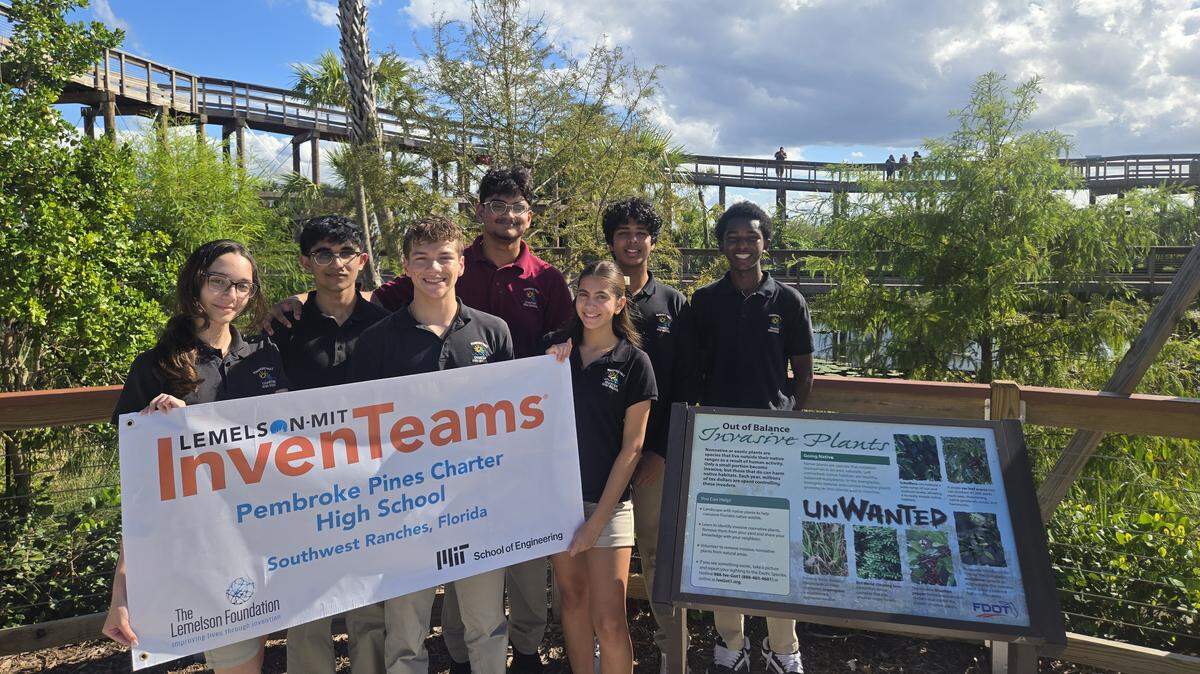
Much has transpired since the Pembroke Pines Charter High School robotics team first received word that it had been selected for the Lemelson-MIT program.
Most notably, the team welcomed a new member: RADIX, an autonomous robot designed to identify and remove Brazilian pepper plants — one of South Florida’s most aggressive invasive species — from the Everglades.
The InvenTeam was selected Oct. 29 as one of eight high school teams nationwide for the 2025-2026 Lemelson-MIT Program.
Since then, students have refined their design, traveled to the Massachusetts Institute of Technology, participated in EurekaFest and filed provisional patents as they continue to refine RADIX.
From the beginning
The idea to tackle the Brazilian pepper plant came during a field trip to the Everglades with Florida International University professor Jed Redwine.
Students learned about the challenges that came with removing the evergreen shrub.
“ RADIX is actually a Latin word for root,” said Valentina Glen, the team’s lead of administrative communication.
Originally, the students envisioned a drone that could remove entire root systems before pivoting to a stem-cutting rover after finding the roots often extend deep underground.
Building the solution
Building RADIX came with a unique set of challenges.
One of the biggest was finding affordable parts that could withstand the demands while staying within budget.
“Finding the actual parts was one of the hardest parts,” said Caitlin Estevez, the team’s lead of research technical communications. “We needed specific hub motors because we wanted [ RADIX] to be very fast and strong ... so we used scooter hub motors.”
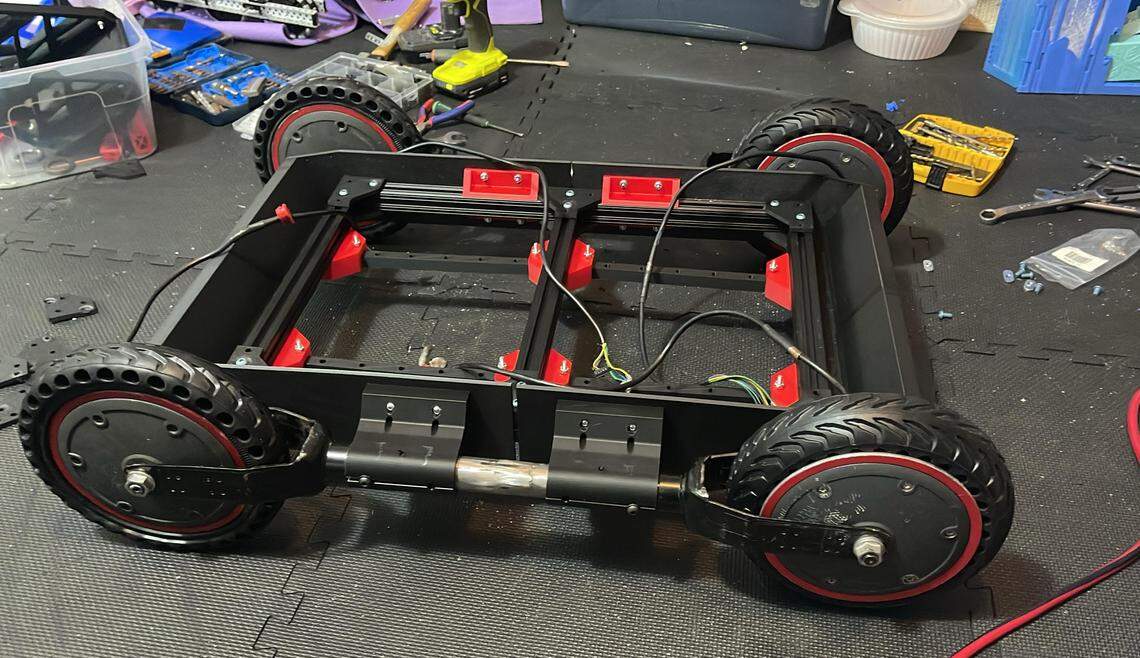
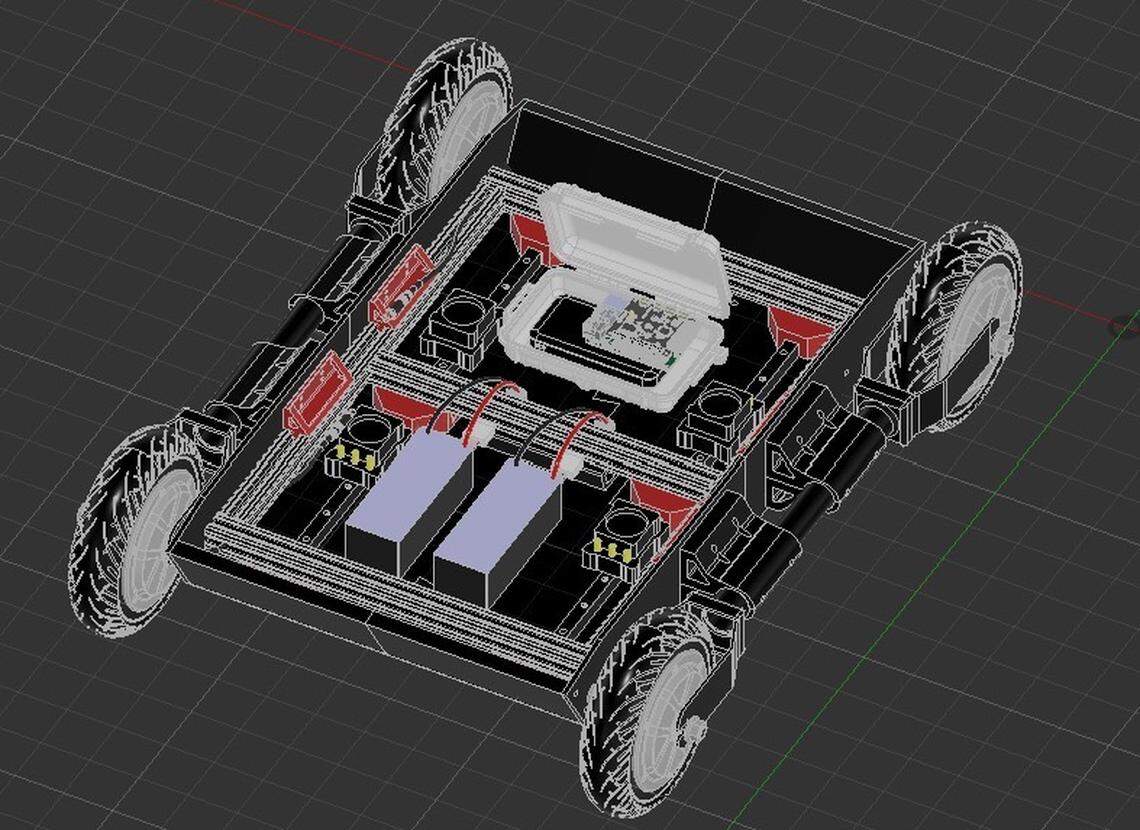
The search led the team across South Florida. Estevez said the team contacted roughly 20 stores before locating the parts they needed from a repair shop in Miami.
“We needed to find good and affordable parts because we were on a budget,” lead of research communication John Abohasen said. “We had to look around and negotiate.”
Estevez said that another challenge involved the team’s research technical lead Umer Quershi, dabbling in an ancient profession.
“None of us have really a lot of experience with welding. It was his first time,” Estevez said. “But he did enough research that he pulled through and managed to do it safely.”
The team welded in Quershi’s garage. Quershi tells the story with pride and says he found a new love in welding.
“ For the actual drive train, we had to weld two scooters like the top,” Quershi said. “Imagine the handlebar of a scooter, that bar that connects the handle bar to the wheel is what I used and I welded two of those together.”
He learned the basics by watching a YouTube video and with a couple practice sessions.
“I became pretty good at it ... that one experience was amazing,” Quershi said.
The robot’s “brain” is a Raspberry Pi 5 microprocessor, utilizing PlantNet as a database for identifying the plants.
Boston
By March, the team’s progress had carried it from its workshop to MIT.
During the three-day visit, the students toured the campus, collaborated with other teams and presented RADIX to MIT staff, faculty and industry professionals.
“We were able to meet all the teams that are in the program,” Glen said. “It really helped bring our group together because we were able to interact in an environment that was outside of our usual laboratory.”
When it was time to present the project, the team said it felt the nerves.
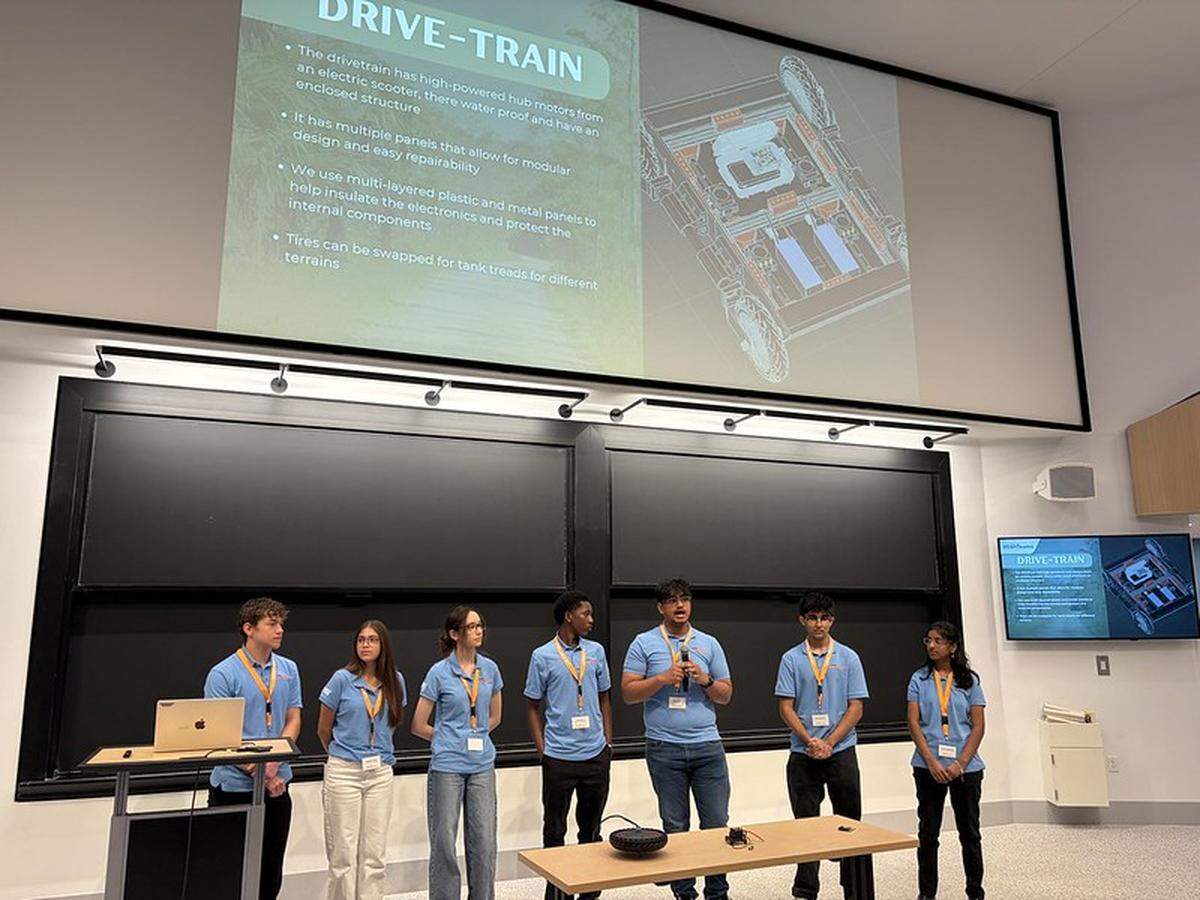
“It was very nerve-racking presenting,” Abohasen said.
The experience also showed the students they needed to explain South Florida’s unique ecosystem to audiences unfamiliar with the Everglades.
“They thought the Everglades was just mainly swamp and they were like, ‘How is a robot supposed to go through the swamp?’” Abohasen said. “We had to further explain that we were targeting more grassland areas that would be easier for the robot to get through.”
For Quershi, the trip to Boston gave a glimpse into what working in a professional environment would look and feel like.
“Being at such a high level of a university was something that we had not done before, especially presenting in front of people who actually had real world experience in the industry,” Quershi said.
EurekaFest
The team participated in a virtual EurekaFest on May 19, the culminating event for the InvenTeams program during which students presented their inventions and reflected on the progress made throughout the year.
“I think there are a couple things that we can improve on, like being more technical about our invention,” Quershi said. “Or have more testing so that we understand where more problems are currently.”
In addition to the presentations, the event featured talks from engineers and inventors who shared how they transformed ideas into real-world solutions.
“That in itself was another learning aspect for us because through this program we’re able to learn technical aspects, but we also learn how to pitch ourselves,” Quershi said.
The students say RADIX is still a work in progress and that they have filed provisional patents and are continuing to refine the robot before pursuing full patent protection.
Quershi also said the team hopes to continue developing the robot’s cutting arm and overall functionality.
Glen said the team plans to host a community event at Pembroke Pines Charter High School, perhaps in September, to showcase RADIX and encourage students to get involved in STEM programs.
“We want to show [students] that STEM programs are much more than just creating something,” Glen said. “It’s a community, you build bonds with these people and you share so many good memories.”
Looking back, the students said the project changed significantly from where it began.
“I couldn’t imagine that we’d end up here at this moment like with RADIX done with the solution to the problem that we were trying to solve,” Abohasen said “It’s pretty surreal this experience that we’ve had.”