Pembroke Pines students build robot with MIT to tackle Everglades invasive plant
Scorching temperatures and pesky mosquitos loomed over a group of Pembroke Pines Charter High School students as they stepped into the Everglades, searching for a problem that needed solving.
During a field research trip guided by a Florida International University professor, the students from the robotics team scanned the dense landscape until an evergreen shrub with glossy green leaves, white flowers and clusters of bright red berries stood out.
The students learned it was the Brazilian pepper plant, one of South Florida’s most aggressive invasive species.
That field trip turned into a yearlong engineering project aimed at developing an autonomous robotic solution to help remove the plant from the national park.
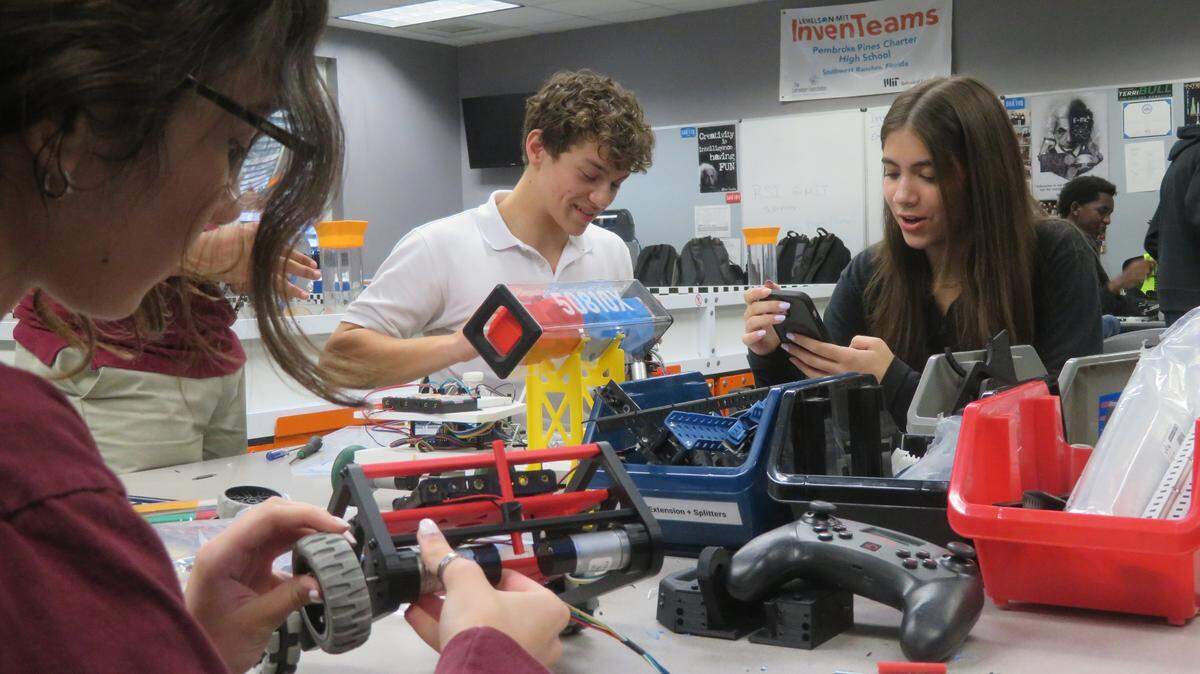
The seven-member team was selected on Oct. 29 for the 2025-26 Lemelson-MIT InvenTeams program, a national initiative that supports high school students designing tech-based solutions to real-world problems. The team was among eight chosen across the U.S.
The program provides $7,500 in grant funding and a yearlong mentorship as the team works to build its invention, one it hopes could make invasive species removal safer and more effective in one of the country’s largest ecosystems.
“We thought since last year we did something to help humanity, we should change it up a little bit,” said junior Umer Qureshi, one of the students on the L-MIT team. “We’re near the Everglades so it’s really easy to do something for the ecosystem.”
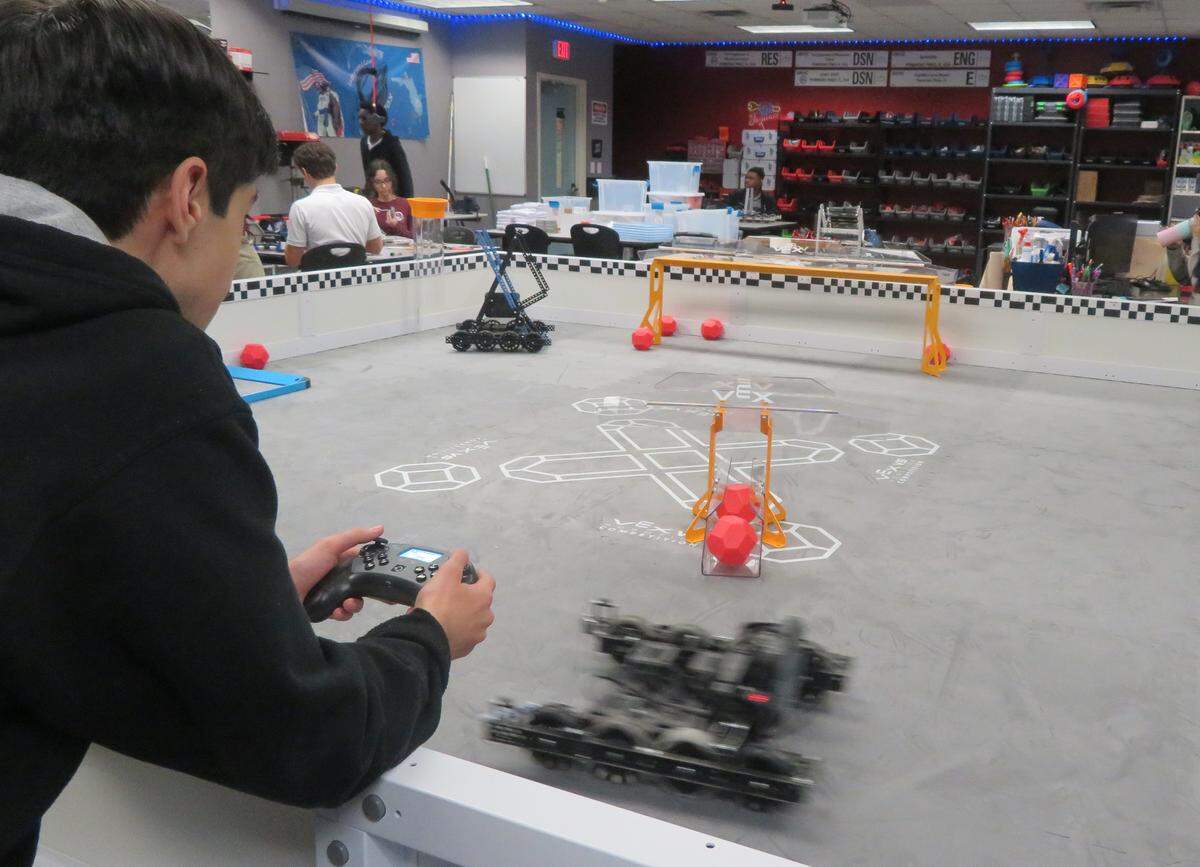
Before turning its attention to the Everglades, the robotics team came off a first-place global win in the “Made to Move Communities” challenge, where it developed an AI-powered app to improve mobility for people who are visually impaired.
From this, the students knew they wanted to pursue more opportunities and continue to push themselves, leading them to apply to the L-MIT program.
Growing problem in Everglades
The team narrowed its focus after conducting research and field work with Jed Redwine, an associate professor of research at FIU’s Institute of Environment. During the day the students spent in the Everglades, Redwine introduced them to the scope of the invasive species problem and the methods used to manage it.
“We narrowed it down to the Brazilian pepper since it was one of the most invasive species here,” sophomore John Abohasen said, “Now we are developing and still researching to find out an idea to correctly tackle this.”
Brazilian pepper plants grow quickly, often crowding out native vegetation. In some areas of the Everglades, the team learned, the plants are so thick that they are nearly impossible to access on foot.
Park rangers often trek through the terrain carrying heavy backpacks and manually cutting the plants with machetes.
Caitlin Estevez, a sophomore on the team, said that Redwine introduced the students to a park ranger working on the ground.
“It’s terrible for them because there’s bugs and dangerous things throughout the Everglades,” Estevez said. “So this rover could really help all of those people.”
Designing a solution
How do the students plan to address that problem? For now, they’re keeping the details under wraps.
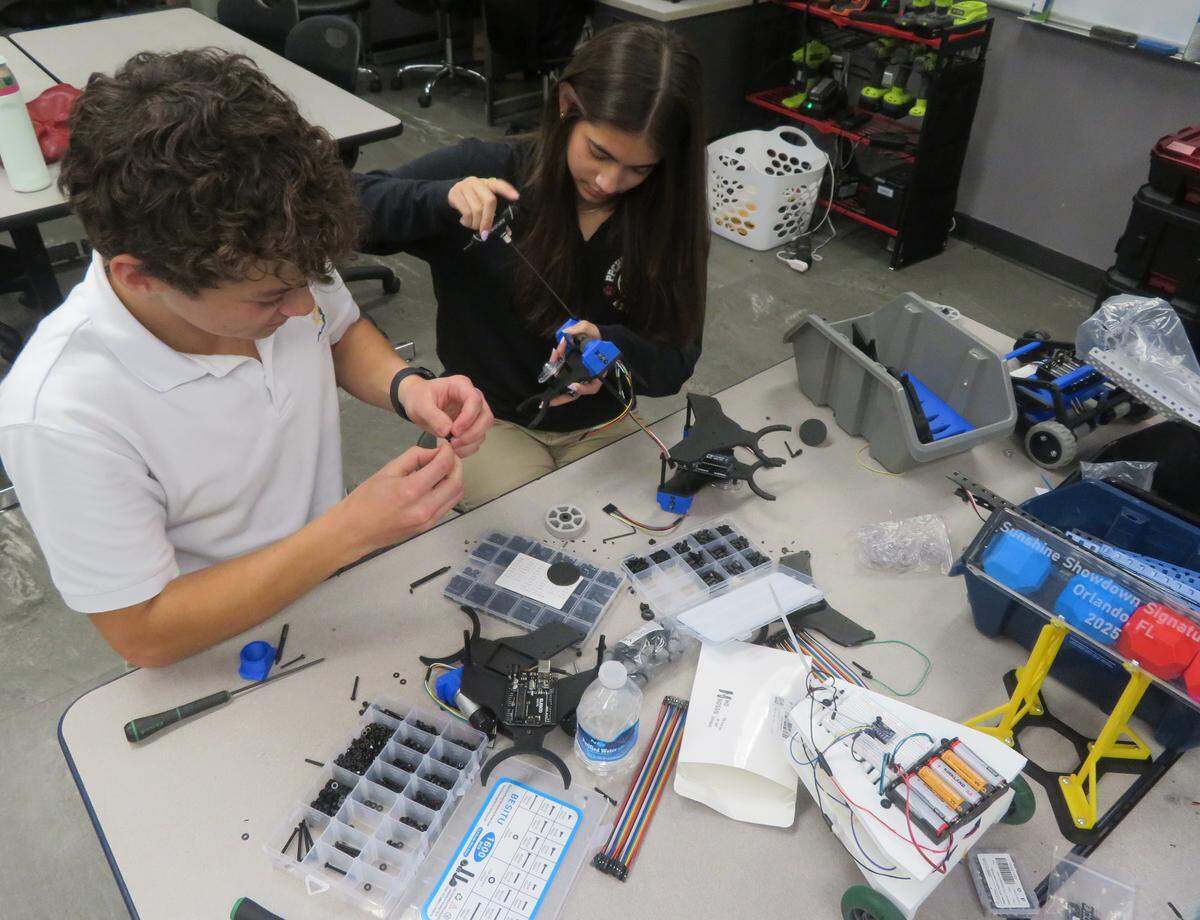
Specific aspects of the design remain confidential as the team hopes to pursue a patent with support from MIT. What students can share is the solution will be autonomous and capable of navigating the unpredictable Everglades terrain.
“One of the biggest challenges is finding a way to not harm the native plant species, but be able to effectively remove the invasive ones,” sophomore Valentina Glen said.
Senior Steve Jacob says they’ve also had to consider how to stop the invasive species from continuing to propagate.
“It’s not just getting rid of the current ones but also the future ones,” he said.
Beyond the technical challenges, the project requires a significant time commitment.
After completing their academic work during the school day, the students meet in the robotics lab every afternoon.
“We’re here till late,” teacher Darlene Laffler said.
Laffler, a Pembroke Pines resident, has taught at Pembroke Pines Charter High School since 2013 and has more than two decades of experience in biology and chemistry education. She oversees roughly 30 students across the school’s robotic teams.
“For me, it’s always emotional every time my kids do something successful,” Laffler said. “Every time they’re winning, it’s amazing to see them and it’s what gives me the motivation to keep going.”
She recalled the trip to the Everglades as challenging but said it was an essential part of their learning experience.
“They got to see that people actually go out there and do this. This is their job to go out and pluck these plants,” Laffler said. “Technology is advancing so much that it makes our everyday lives easier. Why isn’t it easier for this, too?”
What’s to come
Being selected as a L-MIT InvenTeams finalist marks a major milestone for the students and school, opening a partnership with one of the world’s leading research universities.
Still, Laffler noted that the grant money will not cover all of the project’s expenses and the team continues fundraising.
The students are expected to travel to Boston in late March for a rehearsal event, where they will receive feedback on their project. They also plan to host a community showcase in the late spring, where they hope to unveil the top secret and completed mechanics of their invention.
For Abohasen, the project has already changed how he views the environment.
“I love that we are helping out our community and Florida,” he says. “I haven’t been to the Everglades that much ... but with this project, it’s helped me branch out.”
As the students continue refining their invention, they hope their work encourages others to take on challenges close to home.
“Starting off and figuring out the challenges as you go, is a lot better than not starting at all,” Jacob said. “That’s where you’ll really grow and learn how to be creative. It’s through the process, not just sitting around and waiting for it to come to you naturally.”
This story was originally published January 29, 2026 at 2:25 PM.