‘We had worked so hard.’ Broward teen climate team honored in Pembroke Pines
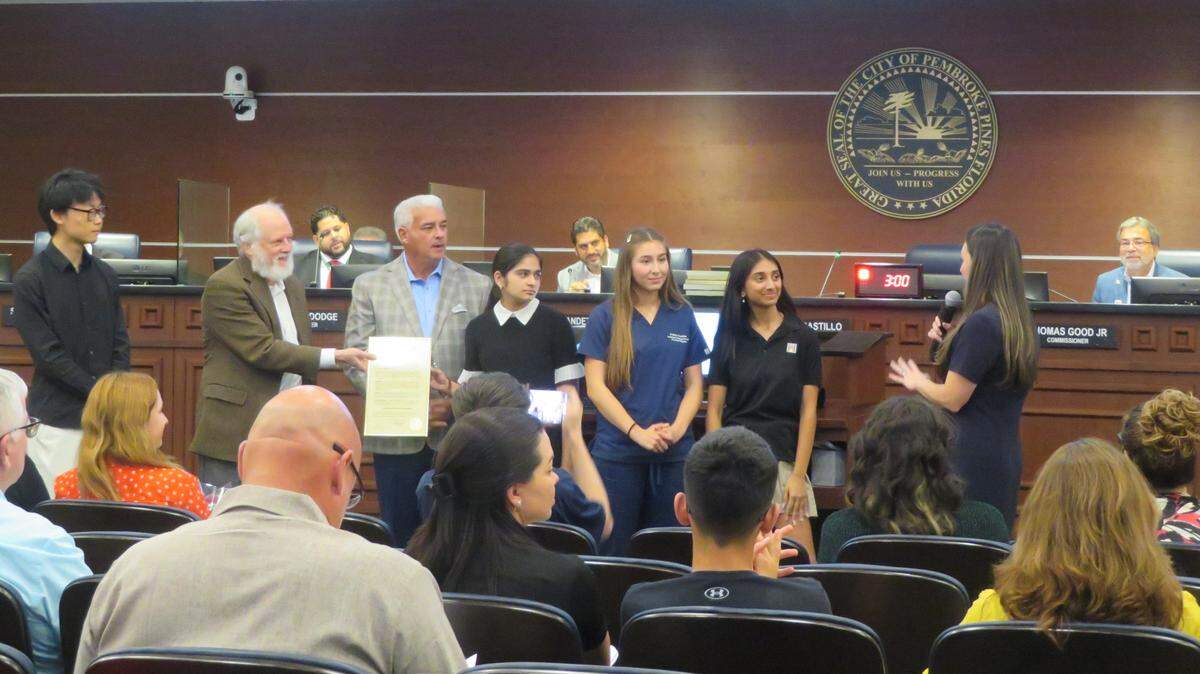
With seed packets, garden plans and sustainability goals at the ready, a group of climate-focused teens presented their work to the City of Pembroke Pines at City Hall.
At the commission meeting on Wednesday, Nov. 19, Mayor Angelo Castillo presented a proclamation recognizing the Broward Sierra Group Junior Team for its climate advocacy efforts within the city.
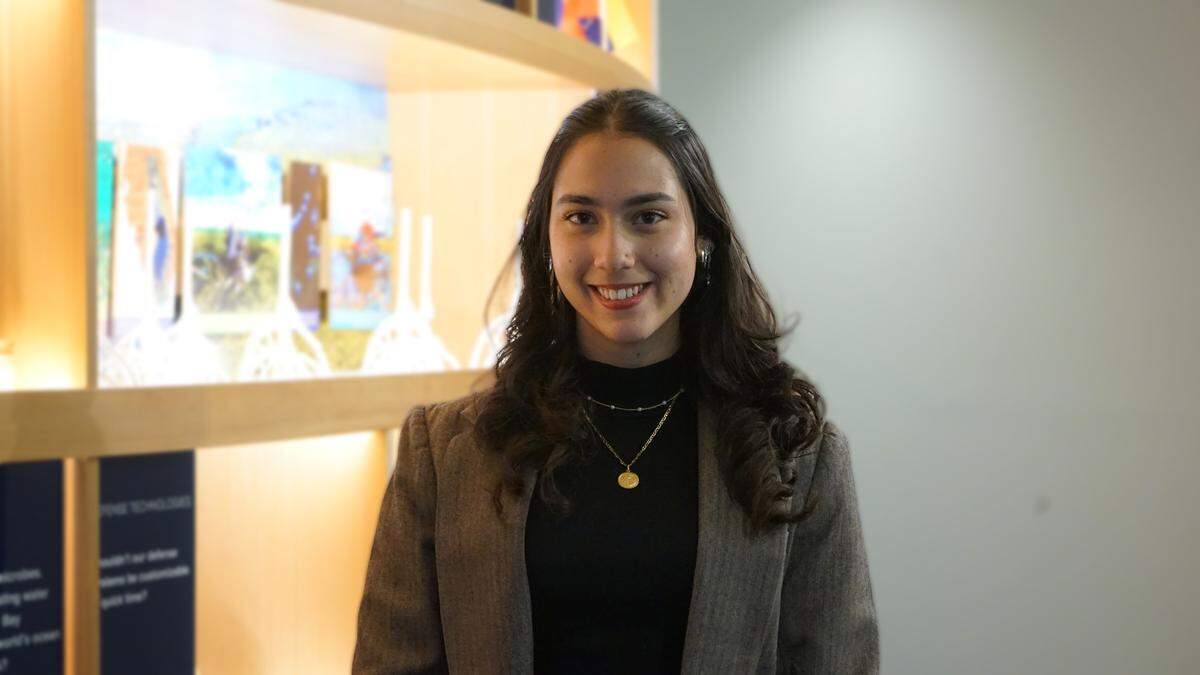
The team, part of the Broward Green Schools Campaign, is led by Chair Anagha Iyer, who founded the Broward chapter four years ago, and Communications Chair Audrey Dueñas, a Pembroke Pines resident. Both are seniors at American Heritage School in Plantation.
During the meeting, the students gave a presentation outlining their work to make schools across Broward County more sustainable.
The proclamation, they said, felt like a milestone.
“It was really just a great culmination of all of our efforts, and Pembroke Pines is another city that, having them supporting us, really helps,” Iyer said. “After the proclamation, some of the commissioners went up to us and talked about implementing some initiatives within the charter school system.”
Pembroke Pines has a mix of public and charter schools, with a significant focus on the city-run charter school system.
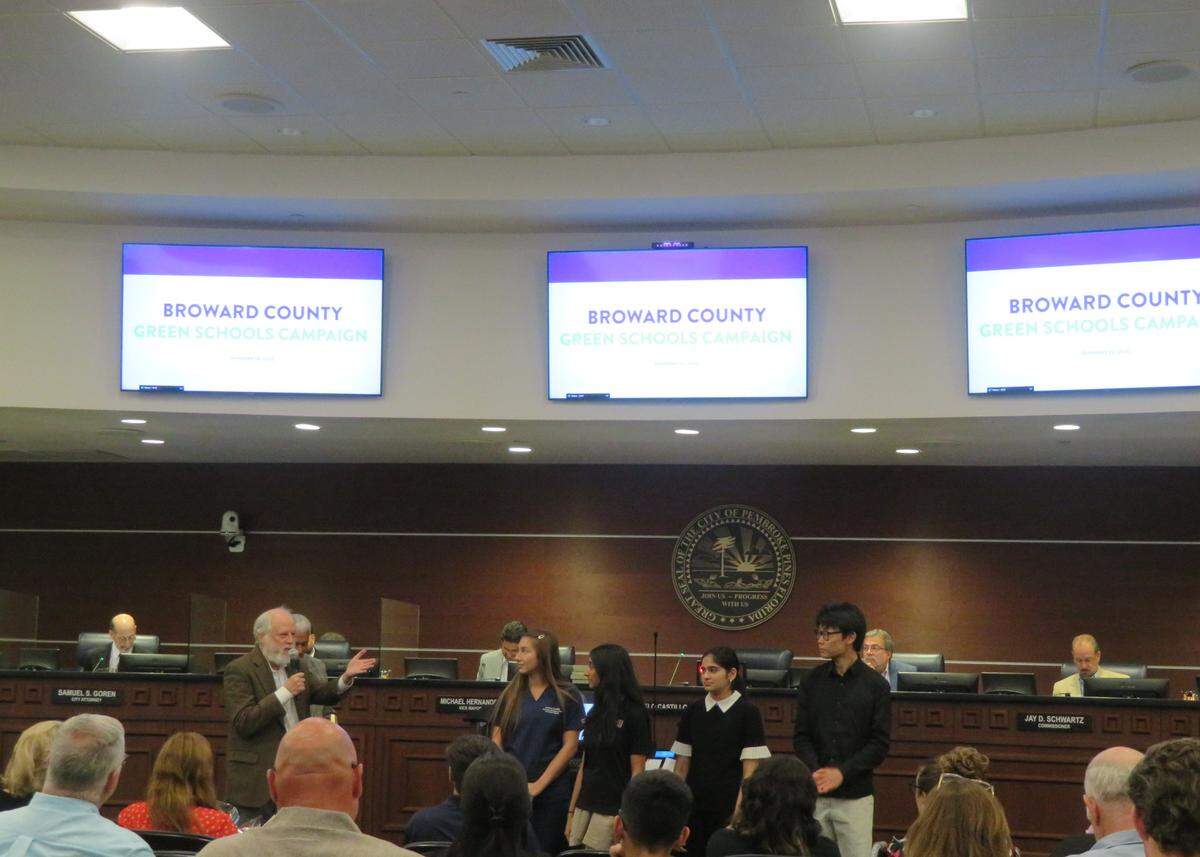
Dueñas said she appreciated that District 3 Commissioner Maria Rodriguez and the mayor spoke with them afterward.
“It was really exciting to see, wow, this is something that we had worked so hard for,” she said.
What the team does
The Sierra Club is a national environmental organization, housing chapters in every state. The Broward Sierra Group Junior team is the youth chapter in the county, made up of high school students ages 13-18 who work on sustainability, climate advocacy and environmental education.
The group is part of the Broward County Schools Green Initiative and has received county support to bring green practices into public schools.
“I feel like a lot of people want to do something, but they don’t necessarily know how to get involved,” Dueñas said. “With the junior team, a lot of younger students have reached out to us and we’ve done a lot of events, for example, the seed libraries.”
One of their most successful projects has been the seed libraries program, funded by a $5,000 Youth Climate Action Fund grant. Students stock packets of seeds at local libraries so families can take home and begin gardening.
The junior team has set up these libraries at five branches across the county: Miramar, Carver Ranches, Southwest Regional, Northwest Regional and West Regional.
“I feel as though a lot of students learn about climate change and the environment in school, but they’re always told about it in a very negative light and they’re not really sure what to do about it,” Iyer said.
Iyer recalled one interaction with a parent while refilling the seed library at the Southwest Regional Library, a location connected to Pines Charter students that draws a lot of their student engagement.
“She was super excited about it and talked to me about wanting to start her own seed library in her old school,” Iyer said.
“Learning about climate change in school is amazing, but then if you don’t do activities at home ... you don’t actually learn it,” Dueñas said.
Planting the seed
While the campaign has focused extensively on public schools within the county, the team is actively pushing for more engagement from private and charter schools, which make up a large portion of Pembroke Pines’ education system.
“A lot of our activities include speaking to Broward County School Board members, so we’ve met with people like Maura Bulman, Rebecca Thompson and Debbi Hixon to get them to support the Green Schools campaign,” Iyer said.
What comes next
Both Iyer and Dueñas said small steps from the city could make meaningful progress.
“Switching to LED lights can be a lot more energy efficient,” Iyer said. “Also implementing things like a community garden and composting, that really engages students because they can actually have hands-on learning experiences where they get to garden.”
Their next initiative is advocating for composting programs in schools and communities.
“Our original goal started with trying to transition schools to 100% clean energy, but that’s like a big ask and we hope that inevitably in the future it will happen,” Iyer said. “But I think compost is a very good way to make schools green since they are one of the biggest contributors to waste. And it’s a small step, but it can go a long way.”