Pembroke Pines youth soccer club celebrating important win off the field
.jpg "The Pembroke Pines City Commission voted unanimously to approve funding for the first year of its three-year strategic plan, which includes about $5.6 million in parks and recreation projects out of a total of $47 million in planned spending the next three years.")
The Pembroke Pines City Commission chambers were packed the night of Oct. 15.
Rows of yellow jerseys filled the seats as dozens of children from the West Pines United Soccer Club, flanked by parents and coaches, eagerly awaited a vote that could change how often they get to play.
They weren’t there for a game, but for a decision that could shape their playing fields for years to come.
“When we heard that the city was trying to allocate money for our parks, I asked just a few parents to turn up to support this,” said Neil Charley, president of the West Pines United Soccer Club. “And it avidly turned into a little bit more than just a few parents.”
Charley told the Pembroke Pines News that there seemed to be more than 100 residents in attendance, many of them families who’ve grown used to watching soccer games canceled or cut short because of rain.
“One of the major issues that has been happening lately is a lot of rain, so we haven’t had practices,” Charley said. “We haven’t had time for our tournament, our state cups — last year we were State Cup champions in one of our age groups and we were regional champions a year before.”
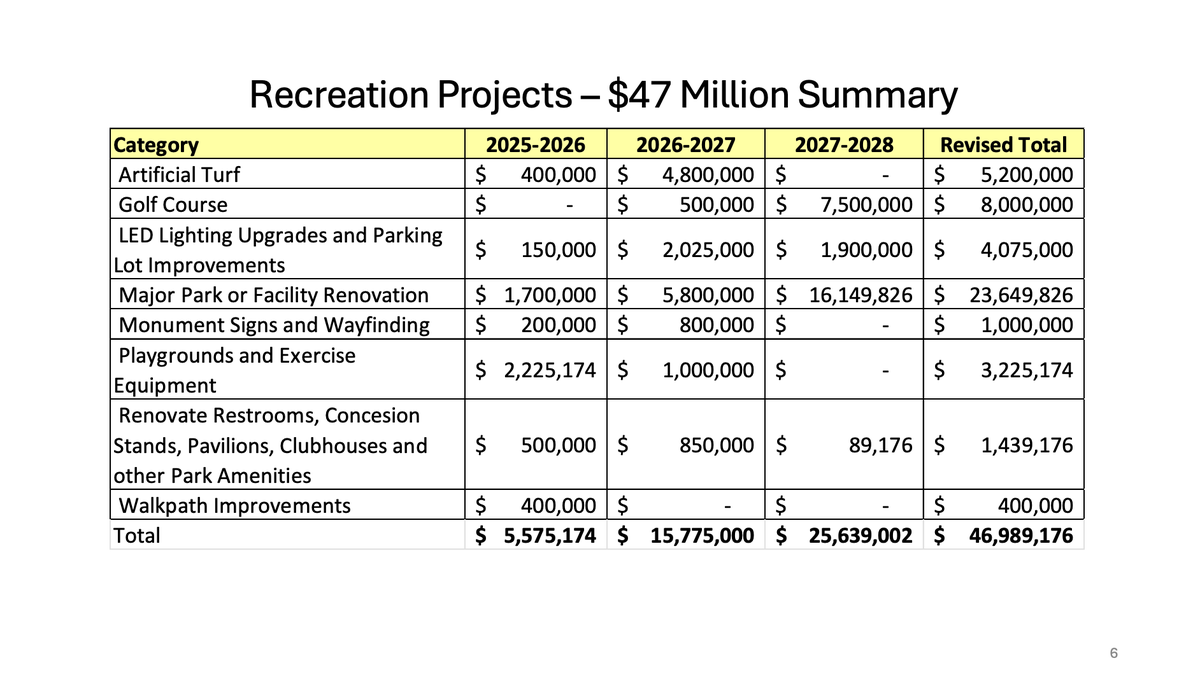
That night, the City Commission voted unanimously to approve funding for the first year of its three-year strategic plan, which includes about $5.6 million in parks and recreation projects out of a total of $47 million in planned spending the next three years.
Residents such as Charley say the move marked the beginning of long-awaited upgrades to city parks and facilities.
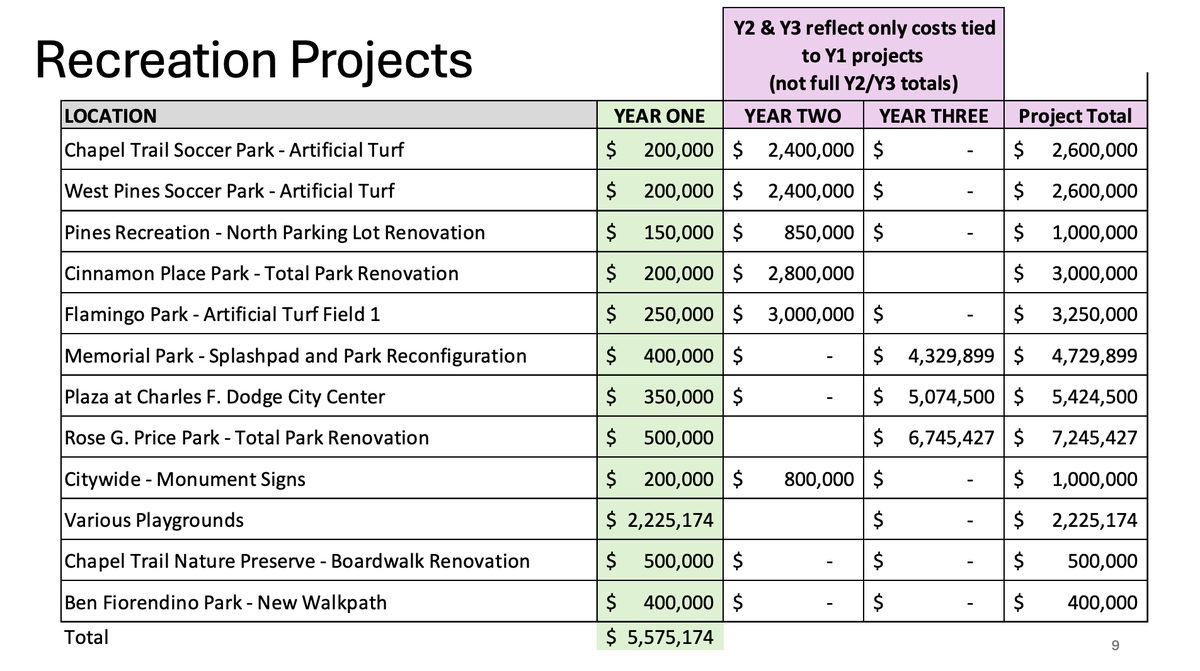
Among the slated upgrades for the first year: artificial turf fields, playground and exercise equipment replacements, and renovations to restrooms, concession stands, pavilions and clubhouses at several parks.
Chapel Trail and West Pines soccer parks each received $200,000 for artificial turf design work.
Charley says artificial turf fields will make all the difference for the young athletes.
“You’ve heard the term, ‘Practice makes perfect.’ If you can’t practice, how do you get better?” he said.
Durable and dependable fields mean consistency and commitment for the teams, Charley says: “If you want to play the game and you come to practice every day, you’ll only get better. So it instills discipline.”
Beyond athletics, he says the change could lift the spirit of the entire neighborhood.
“It gives a community a better outcome,” Charley said. “And to be honest, it just looks nicer because you won’t have dead grass, you won’t have holes in the area.”
Vice Mayor Micheal A. Hernandez, who represents District 4, said the decision marks the start of overdue improvements for fields that often become unusable after rain or inclement weather.
“We are a bedroom community in southern Southwest Broward County that values parks and recreational programming,” Hernandez said. “The fields that are in District 4, that I advocated most for receiving the funding, need the maintenance and we need to be able to enter the design phase … so that these young children can actually play, even though there may be a wet summer or even into the fall.”
The commission’s vote on Oct. 15 moved those designs forward, with the next steps requiring project proposals to come back for the commission’s approval as costs are finalized.
“They’ll see the upgrades throughout the next fiscal year,” Hernandez said. “So the work is starting now for year one.”
The city commissioners will reconvene at their Nov. 19 meeting.
The improvements, Charley said, represent more than infrastructure.
“I believe the community as a whole is going to be ecstatic when it happens,” he said. “It’s a long improvement needed for I think a city falling behind in the times, our surrounding areas are doing it. Why did we actually take so long to get it done?”
The commission’s unanimous vote came after months of debate about how to fund recreation projects following the failure of a proposed bond this year. Rather than shelving the plans, commissioners bifurcated the funding, separating park improvements from roadway upgrades, allowing the first-year projects to move forward.
Hernandez said the decision reflects a commitment to putting residents first.
“When we take in money, it’s supposed to be spent back in the community,” he said during the Oct. 15 meeting, adding that youth sports and neighborhood parks are “where those investments are most visible.”
”Charley says the improvements will give the children room to grow. It gives them a constant, ‘I want to go play. Nothing’s going to stop me now, I’m going to become the next superstar,’” he said. “It allows the children to grow in a way that we couldn’t do with just regular fields.”
This story was originally published October 23, 2025 at 11:45 AM.