Pines hospital therapy dog walked to patient’s bedside, then she woke from coma
Priscilla Timmons was three days into a coma doctors believed she might not wake up from when she met Scrunchie, Memorial Hospital West’s 7-year-old golden retriever.
The 38-year-old Hollywood woman had been rushed into the emergency room days earlier after a March 2025 fainting spell revealed large blood clots in her lungs that triggered three cardiac arrests, multi-organ failure and required medical staff to place her in an induced coma.
Family and friends were told she had a 10% chance of survival.
“I remember finding the therapy dogs, begging them to visit ... anyone who knows her knows she loves dogs,” Kandi Barnwell, Timmons’ cousin, said at an Oct. 22 news conference at Memorial Hospital West in Pembroke Pines. “Scrunchie came in, walked to her bedside ... Priscilla moved her hands and reached out to pet Scrunchie. It was a beautiful thing to witness.”

Since being discharged in April, Timmons, now 39, has devoted herself to running her Etsy boutique full time, started a blood clot awareness page on Instagram and made a turnaround recovery, adding that a follow-up exam showed her “lungs were 100% clear.”
She’s titled herself the “Memorial miracle” but said she credits faith, family, a “top-tier, world class” medical team, and “therapy dogs, because they are such angels.”
‘Out of the box’ therapy dog program
Timmons’ furry caretakers while hospitalized — Scrunchie and her nearly 5-year-old counterpart Honeycrisp — are just two of a six-dog animal-assisted therapy program started to “relieve pain and discomfort, reduce anxiety and facilitate healing” for patients, according to Memorial Hospital West’s website.
The pups begin their journey with the hospital when they’re 2 years old and arrive knowing 60-80 commands, according to Memorial Healthcare System. Handlers then undergo a week of training to learn how to facilitate the dog-patient relationship before joining the team.
“When patients are having a severe amount of stress for whatever reason, a dog will go up to them, they’ll gently lay with them...” said Director of Nursing Tracy Meltzer in an MHS video covering the program. “Just having the dog in the room and playing with the dog and things like that has lifted their spirits.”
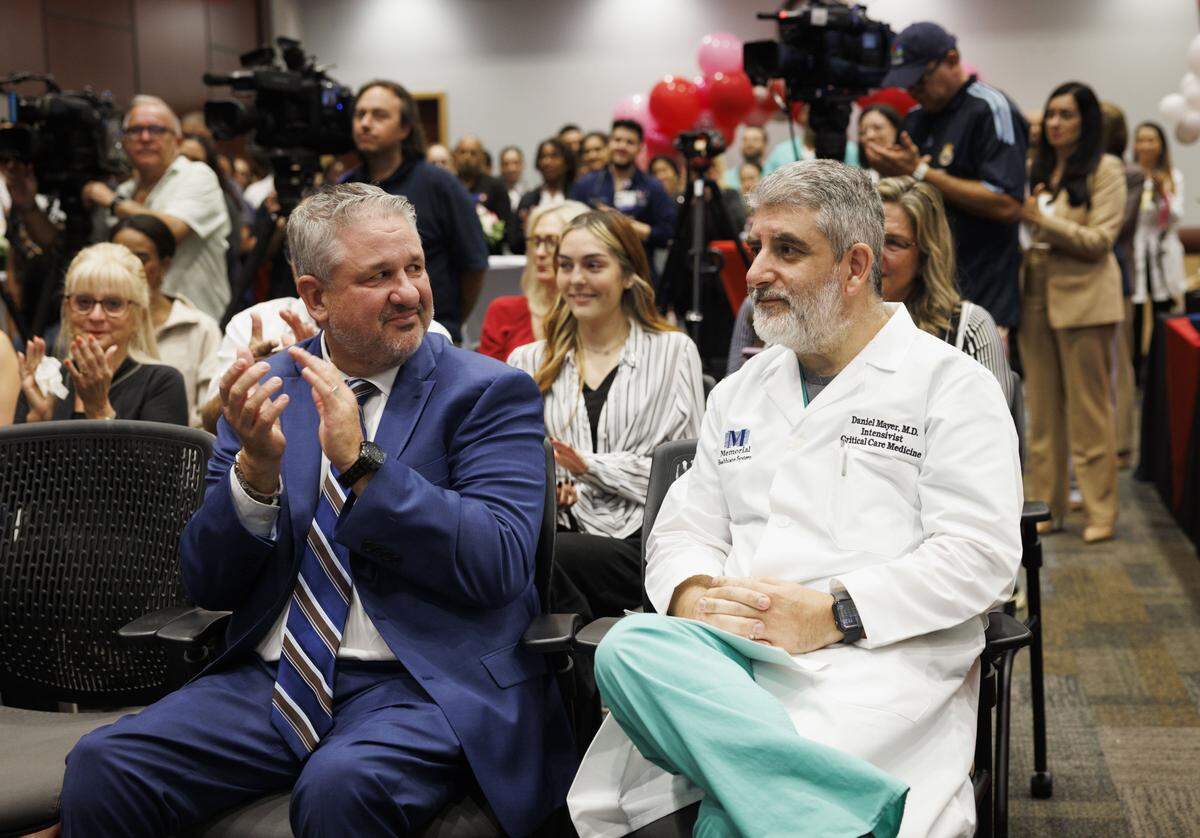
Dr. Daniel Mayer, the hospital’s chief of critical care, believes it’s a creative solution to cases like Timmons’, in which medical care teams can’t rely on “looking for a recipe.”
“In Priscilla’s case, with the pulmonary embolism and multi-organ failure, the chances were 0 to 1%,” he said.
Moments before she was hospitalized on March 13, Timmons woke up nauseous and bolted for the bathroom, where she vomited multiple times and began to pass out. She sent out a hurried text to her mom asking that she call 911 before she lost consciousness.
Mayer placed her on clot-dissolving medication when she arrived to the hospital dizzy, short of breath and blue in the face, with swelling in her left leg. But despite the quick intervention, he said Timmons “deteriorated and went into cardiac arrest.”
His team spent 41 minutes resuscitating the 38-year-old before placing her in a medically-induced coma.
“Walking into that was hard,” remembered Timmons’ boyfriend, 31-year-old Tyler Giraud. “Hearing Dr. Mayer come in and say it’s basically less than a 10% chance, you want to be optimistic, you want to be faithful, but that’s hard-hitting.”
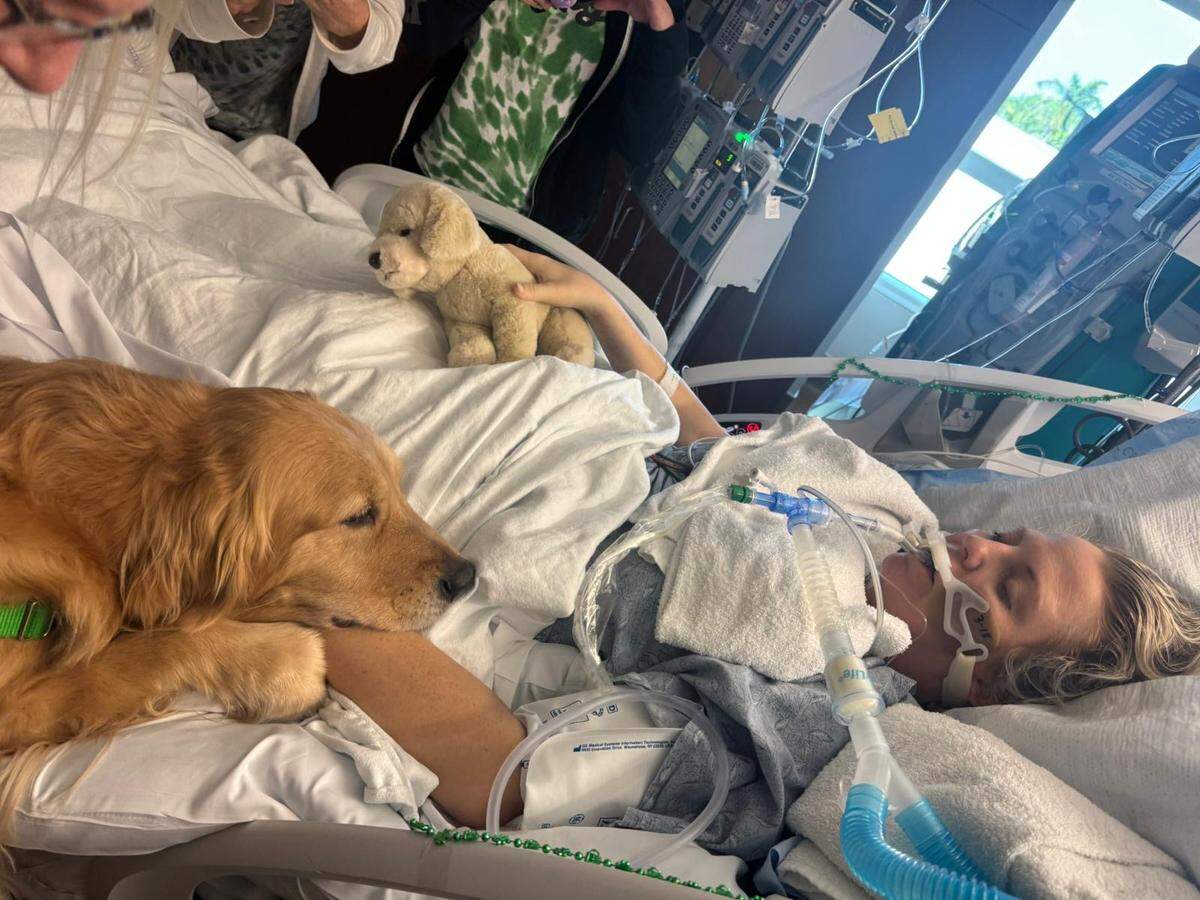
But crisis situations like Timmons’ are where the chief of critical care says the hospital’s “out of the box” animal assisted therapy program can shine brightest.
“It’s not standard of care ... I think we’re very privileged at Memorial West to have our therapy dogs who are terrific,” Mayer said. “Our therapy dogs, I think, played a big impact.”
‘Medically inexplicable’
When explaining what carried Timmons and her family trough her three-week hospital stay, one word frequently comes up for her: faith.
Mayer echoed that, describing her case as the “fine line where there’s science and ... faith” which he says can sometimes be “medically inexplicable.”
While comatose, Timmons was able to hear her friends and family members at her bedside, which Mayer added was uncommon. She remembers hearing her mother’s “soothing voice” and Giraud playing her favorite artist, jazz musician Kenny G., to calm her.
Mayer also highlighted that she beat the 60% mortality rate linked to pulmonary embolism, adding that it’s higher than the mortality rate for those who suffer heart attacks.
To pay her miracle forward, Timmons started up Faith Flows Strong, an Instagram account dedicated to raising awareness of blood clots so she “can try to save a life, one truth at a time,” and encourage others who’ve gone through similar experiences.
“Even when my heart stopped beating, my faith helped me fight beyond that point,” she said. “Everyone has their fight. It’s how you fight that matters. If you fight with faith, you’re already winning.”
This story was originally published October 22, 2025 at 7:08 PM.