No sign of commissioner’s ceremonial badge as questions linger, Pines officials say

A Pembroke Pines commissioner has not returned his ceremonial badge, city officials say.
The badge at the center of a controversy involving Commissioner Jay D. Schwartz, had not been turned in to the police department as of Monday, May 4, weeks after city officials voted unanimously to encourage the voluntary return of all previously issued badges.
Pembroke Pines Police Captain Adam Feiner confirmed Monday that Schwartz had not turned in the badge.
The Pembroke Pines News reached out to Schwartz numerous times for comment and has not received a response.
Last summer, while working as an adjunct instructor at Embry-Riddle Aeronautical University and teaching aviation classes at Charles W. Flanagan High, Schwartz confronted a group of students and, during the interaction, pulled a badge from his wallet, Florida Department of Law Enforcement investigators found.
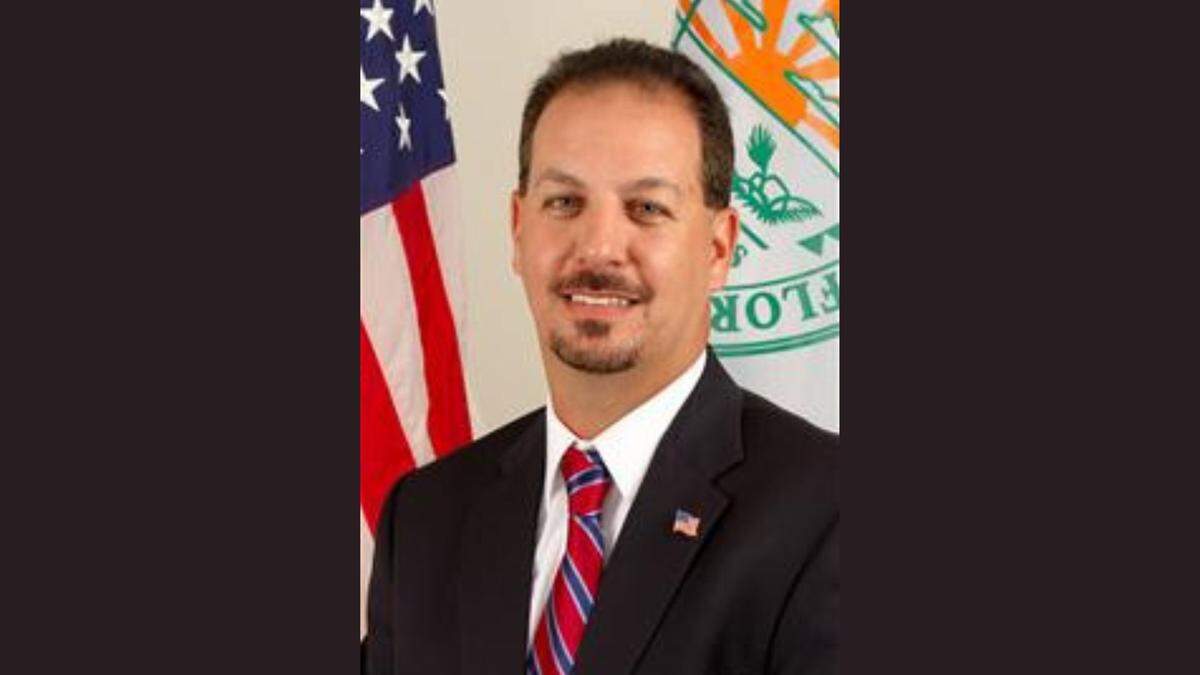
City Manager Charles F. Dodge said he had not heard from Schwartz about returning the badge and that any consequences for failing to surrender it would be up to the City Commission.
The unresolved status follows the commission’s April 15 vote to pass a resolution that prohibits future ceremonial badges for elected officials and encouraged the voluntary return of those already issued.
Mayor Angelo Castillo said the resolution relies on voluntary compliance.
“Those badges were either gifted or in some cases they were paid for by the individual commissioners,” Castillo said. “Under either scenario the badges are the property of the person to whom they were given, so our resolution calls for voluntary compliance.”
Castillo said he returned his badge, which was gifted to him, before the resolution was formally adopted.
“The resolution we passed urges all of us to return it and prohibits any [new ones] from ever being issued,” Castillo said. “ [Schwartz has] chosen not to do that so far and one has to wonder why.”
Dodge said earlier claims that Schwartz purchased the badge with personal funds were not “accurate” and could not be verified through city records.
“I had asked finance to research our records to see if it was ever reimbursed and we can’t find anything where he in fact paid for it,” Dodge said.
Castillo said the incident with Schwartz at Flanagan High “shocked him” and raised concerns about public trust.
“I’m actually concerned,” he said. “Typically, when a resolution like this is passed, commissioners are eager to comply. I complied before it was even adopted because I thought it was the right thing to do in order to protect the public trust, which was eroded exclusively by him.”
The resolution does not set a deadline for returning badges and encourages, but does not require, their return.
Still, Castillo says the measure passed with Schwartz’s support.
“The resolution was adopted unanimously, 5-0, including with his vote, so it’s effective,” Castillo said. “Every second that ticks that he doesn’t hand it in, he’s in violation of the City Commission’s resolution.”