‘Progress every day’: Cyclist hit in Pines crash navigates life with brain injury
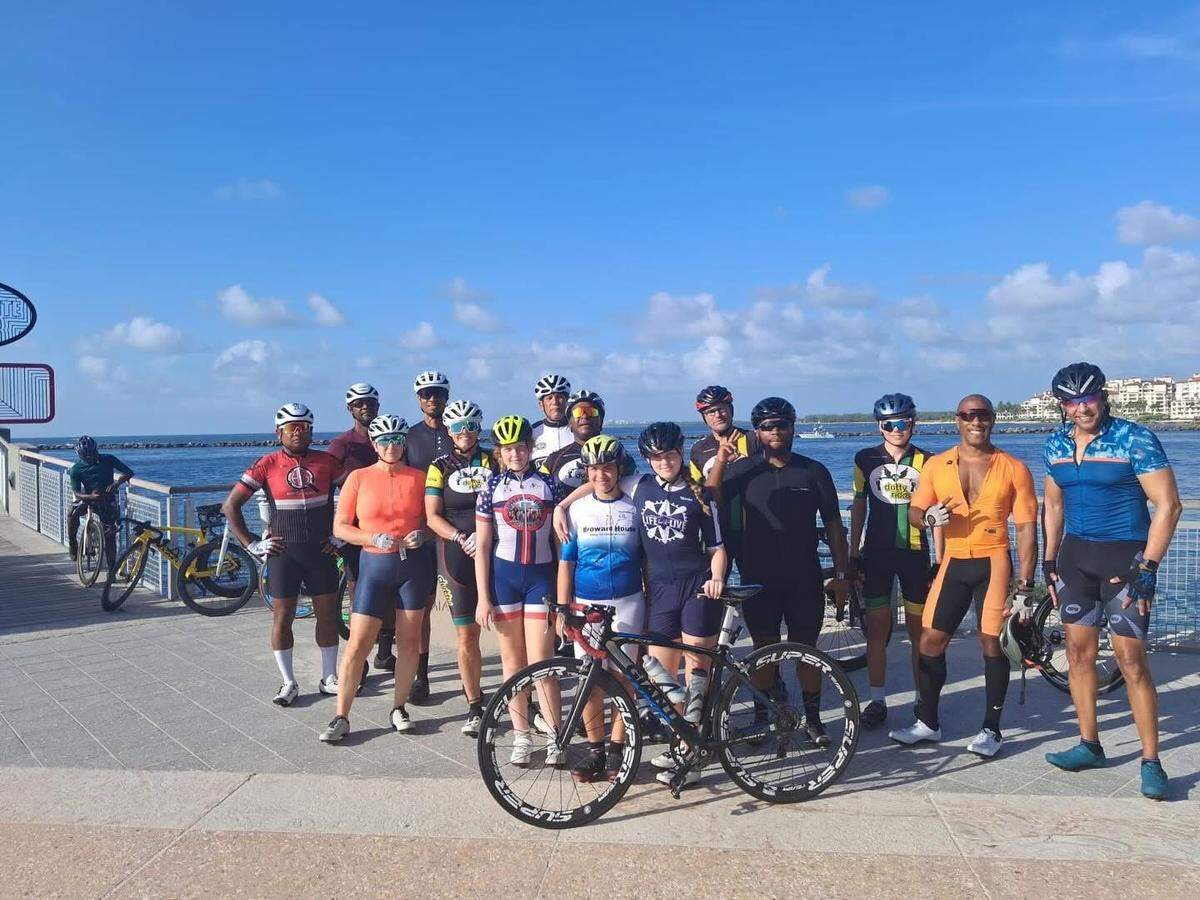
Most Sunday mornings, Charles Woods doesn’t need much motivation for his weekly 40-mile bike ride.
As the food supply chain director of nonprofit Feeding South Florida, he spends most days keeping the shelves of food banks stocked. His scarce free time is spent outdoors and in motion, often hitting the gym, kayaking and cycling.
But on March 22, the 56-year-old Belizean had something else to look forward to on his ride: wearing a newly tailored jersey.
Woods put on his gear, mounted the bike and was seen off by his longterm partner, Elizabeth Ramon, around 7 a.m.
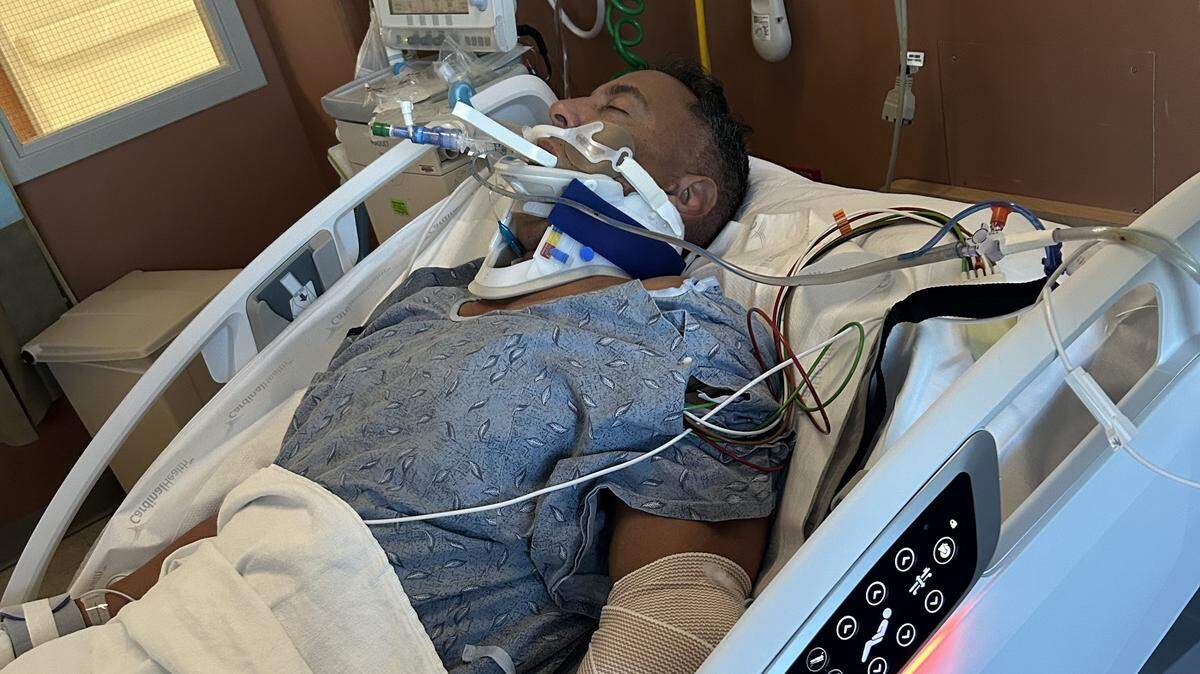
Ten days later, he woke up at Memorial Regional Hospital after being hit by a car, leaving him with a broken arm and a traumatic brain injury doctors say could take “months to a couple years” from which to recover.
“Emotionally, it’s been rough. ... What I remember in my past is everything that I used to do, being active, being at work every day, doing all that,” he told the Pembroke Pines News.
“Let’s say you go to bed tonight in good shape, but when you wake up, you’re in a different environment. People are telling you, you were in this bad accident and it’s been a month, but for you, it’s just been one night. ... I don’t know what’s happened between March 22 and now.”
The accident
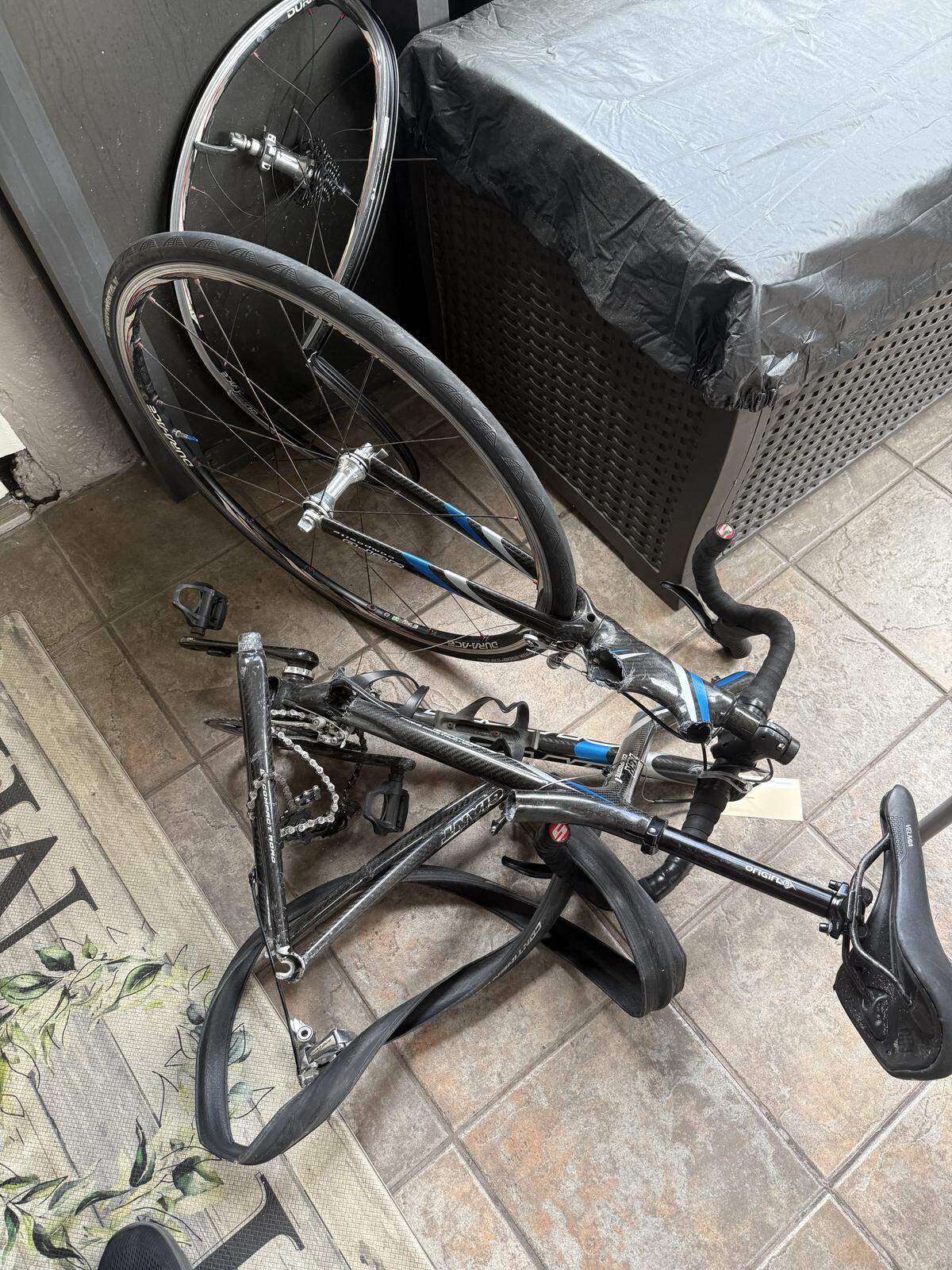
That Sunday, Woods — who lives in Hollywood and goes by Chuck — was on his way to meet with his weekly cycling club when the Pembroke Pines Police Department say a Chevy Tahoe SUV slammed into him near the intersection of Sheridan Street and Chestnut Court.
Both were traveling eastbound around 7:47 a.m. when the collision happened, and “preliminary information suggests (the crash was) accidental, not criminal in nature,” PPPD told the Pembroke Pines News the next day.
Woods was being rushed to Memorial Regional Hospital in Hollywood when Ramon got the call.
“My heart just sank for a second, going, ‘Nothing would have happened to him, right?’” Ramon, 51 and from Cooper City, told the Pembroke Pines News.
The two met on Bumble in 2020 and consider themselves “one of those rare dating app success stories.”
“A sea of police officers were standing (at the hospital) and I just thought, ‘They’re going to tell me that he passed away. I didn’t make it in time.’ ... I look over, and he’s in the CT scan machine and he’s intubated and he’s just covered in tubes. It was just a horrible sight.”
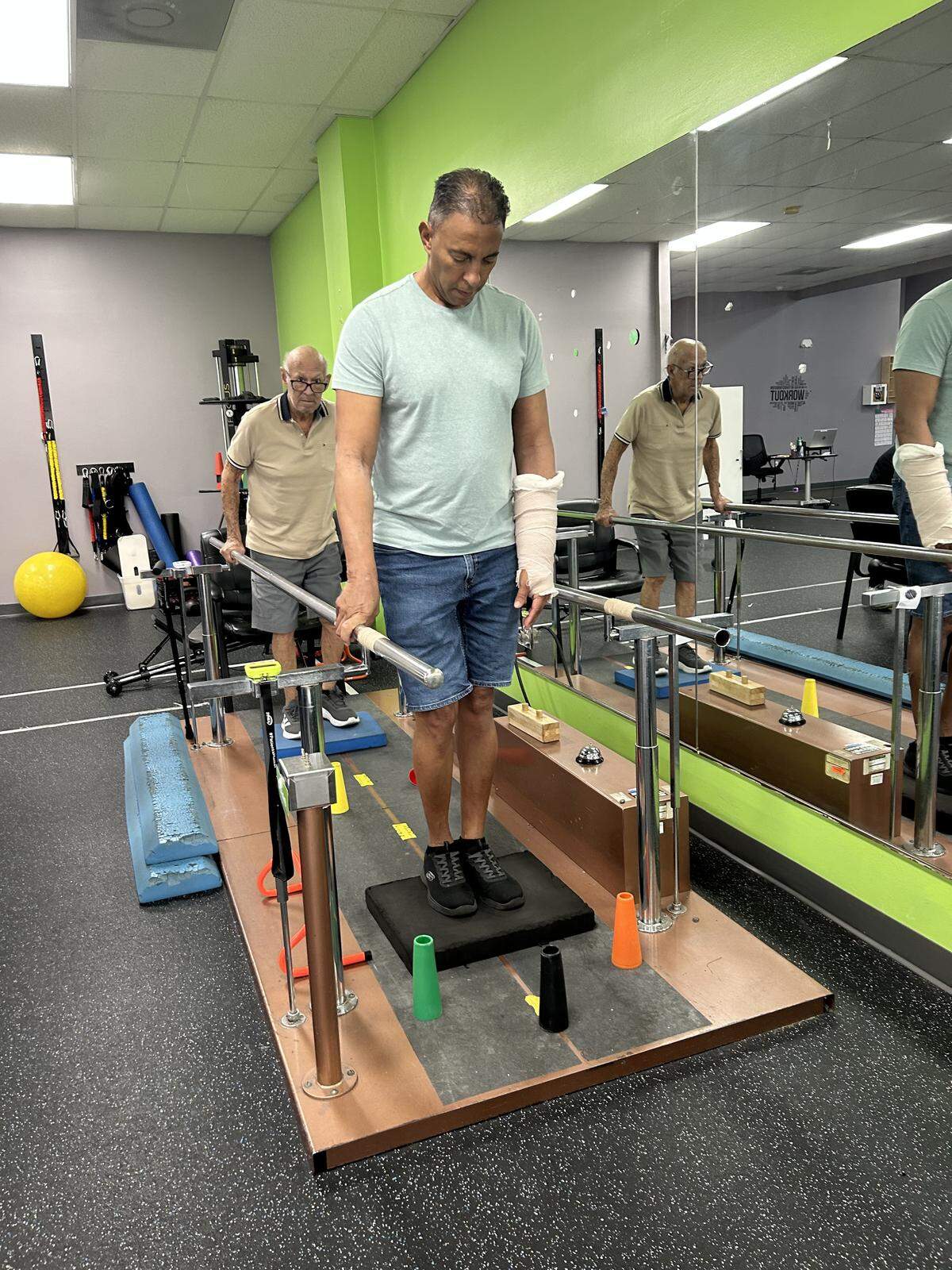
Now home and recovering, Woods is navigating a diffuse axonal injury, a severe form of traumatic brain injury.
As Ramon describes it, the collision’s impact caused three brain bleeds and “shredded” his nerves, disconnecting certain brain networks or regions from one another.
“I think I cried every night when he was asleep (in the hospital), because it was just so hard to see him that way. He’s such an active and he’s such a safe person,” she said.
“He has taken every safety measure. His helmet is fitted. His bike is tuned. He wears all the safety equipment.”
Woods says he struggles to remember things “immediately around the accident,” such as the crash itself, his stay in the hospital or events that happened as recently as this year.
Detailed information — including the times and locations of his many doctor and therapy appointments — are also hard to recall.
Just as daunting as the injuries are the emotional and financial tolls, the Broward County couple say.
The 56-year-old’s condition means he won’t be well enough to work for at least two years. To be his full-time caretaker, Ramon has temporarily stepped away from property management company Castle Group, where she works as a talent management director, without pay.
Medical bills have exceeded $330,000, according to a GoFundMe, and the Chevy driver’s lack of insurance means the couple will bear the brunt of the expense. As of April 30, the fundraiser has drawn in nearly $19,000 of its $75,000 goal.
That’s not to mention the “burden” Woods worries his forgetfulness has become amid the stressors, Ramon says.
“Imagine you don’t remember your cousin’s name, and then you’re trying to figure it out in your brain, and it takes you four hours to do it. It’s a struggle,” she said.
“He feels responsible for what it’s doing to me and the rest of his family. And I just keep telling him, ‘For whatever reason, this happened, and this is the path that we’re going to take, and we’re going to handle it together.’”
The recovery and community support
Despite his recent confusion, one thing is clear to Woods: “I don’t know how I could do this without my girlfriend.”
“She’s been incredible, and I’m so happy that she swiped right on me,” he said.
The same goes for the “revolving door” of friends, family and coworkers who have shown up for the couple during Woods’ hospital stay and after being discharged on March 31.
“The entire executive team of Feeding South Florida has been sitting in my living room,” Ramon said between laughs.
“The well-wishes are crazy. It just keeps pouring in and it lifts our spirits. Not every day is a good day. Not every day is a happy day. ... To get a card in the mail or a phone call, just a text that says, ‘We’re thinking about you, how’s everything going?’ Sometimes that turns our day around.”
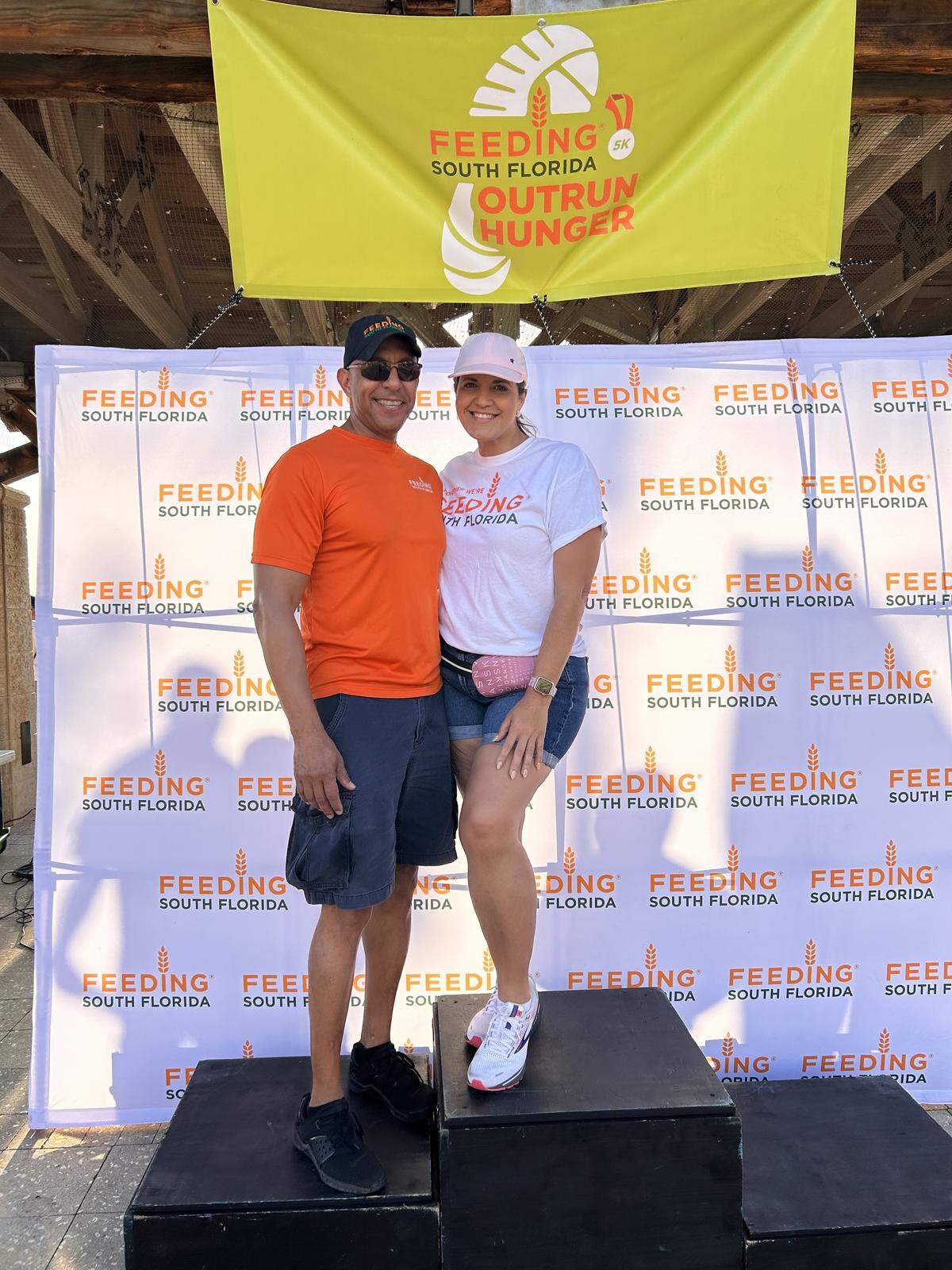
Staying optimistic about his recovery has also been pivotal to Woods, who says he sees “progress every day.”
He’s now walking and seeing cognitive improvements, such as recalling the date he and Ramon met on Bumble and having the stamina for longer conversations, such as his interview with the Pembroke Pines News.
“A lot of what gets both of us through is we are very positive people in general. We just know in our hearts that he’s going to recover fully 100%,” Ramon said.
“Whatever it takes is what we’re going to do. We look at this as not so much something that happened to us, but something that happened for us. He may be stronger on the other end of it all one day, you know?”
This story was originally published April 30, 2026 at 12:38 PM.