What happened to all those iguanas captured in Pembroke Pines? We have answers
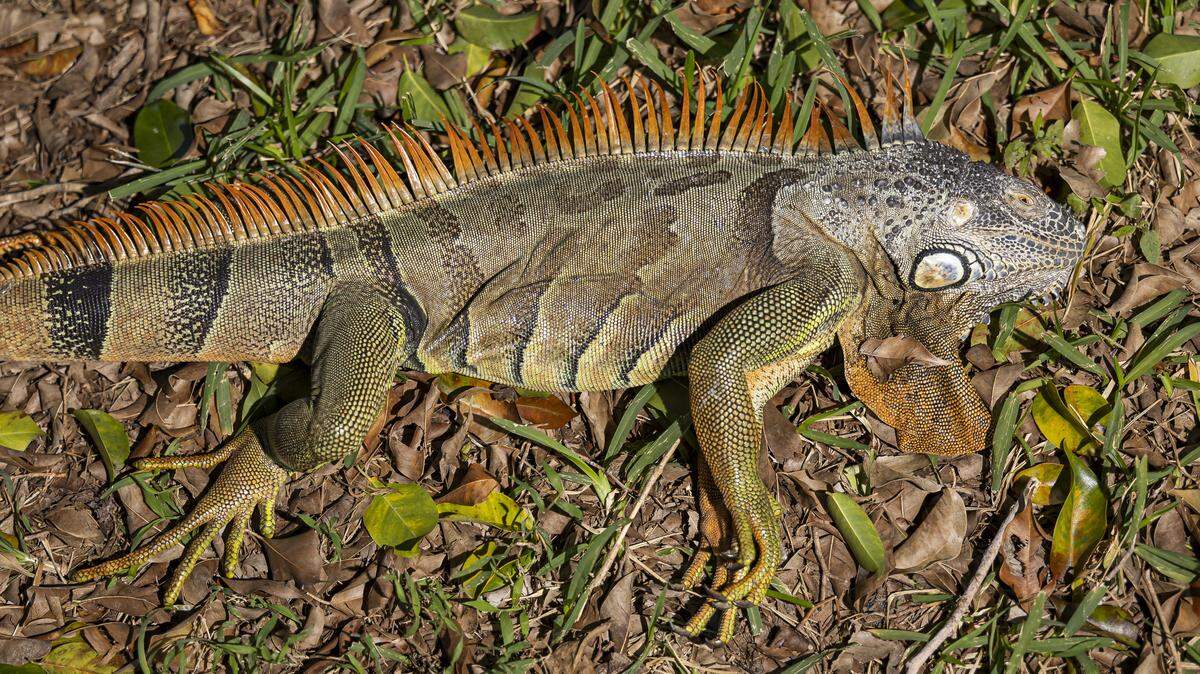
Residents across Pembroke Pines and other West Broward cities woke up early this week to an unusual sight: Invasive green iguanas scattered across yards, sidewalks and neighborhood streets, stunned by the coldest weather to hit South Florida since 2010 and suddenly easy to catch.
Now, the Florida Fish and Wildlife Conservation Commission’s official tally, combined with anecdotal reports from professional trappers, suggests a disproportionate number of iguanas were captured in West Broward cities such as Pembroke Pines, Miramar, Coral Springs and Davie, trappers told the Pembroke Pines News.
So why was West Broward particularly deadly for iguanas?
As temperatures plunged, some parts of western Broward dipped into the high 20s, a lethal range for the cold-blooded reptiles. Iguanas lost muscle control and fell from trees, littering golf courses, parks and neighborhood streets.
In Pembroke Pines, photos showed iguanas lying motionless along residential roads and canals, a favorite habitat. Similar scenes were reported in Miramar and Coral Springs, where residents found clusters of the reptiles near waterways and fences.
Professional trappers said their crews captured an unofficial 1,300 iguanas in West Broward cities — areas where the cold hit hardest and calls from businesses and residents poured in.
That figure represents roughly 25 percent of all iguanas captured statewide during the cold snap.
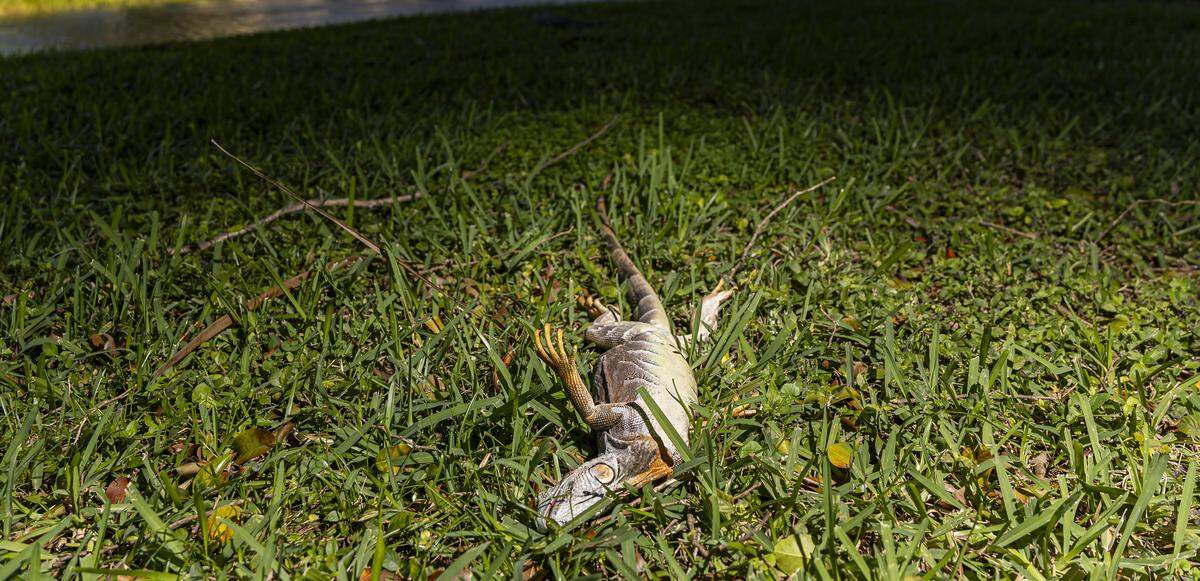
“I think the temperatures were colder in West Broward. We were getting a lot of calls from that area,” said Blake Wilkins, owner of Redline Iguana Removal. “At one golf course alone in Pembroke Pines, my trappers found more than 100 iguanas.”
Anticipating the rare opportunity the cold would present, FWC issued an executive order temporarily allowing the capture of cold-stunned iguanas and accepting them at select FWC offices without a permit.
Although additional cold fronts are possible, wildlife officials said they are no longer accepting iguanas, dead or alive, from the public, according to a news release from FWC Executive Director Roger Young.
On Wednesday, Feb. 4, FWC announced the official breakdown of iguanas collected following the Arctic blast:
- 5,195 invasive green iguanas were removed statewide, according to the Florida Fish and Wildlife Conservation Commission (about 50% were dead)
- 3,882 were delivered to the FWC’s Sunrise drop-off location, which serves West Broward
- 1,075 iguanas were taken to the FWC’s Tequesta location
- 215 were delivered to the Marathon site
- 23 were taken to the Fort Myers location
Across West Broward, other trappers described scooping up iguanas “by the dozens” as the cold overwhelmed the invasive reptiles, which lose muscle control when temperatures fall below 50 degrees, the Miami Herald reported. The phenomenon of iguanas falling from trees is rare but a well-known Florida cold-weather event.
In 2025, the eye-opening spectacle even inspired a children’s book, “Watch Out for Falling Iguanas,” by Haitian-American author Edwidge Danticat, a former South Florida resident.

Of the iguanas turned in to the state, those that could not be transferred to permitted holders were humanely euthanized by trained staff, Young said.
Some live iguanas were transferred to authorized permit holders, including for sale outside Florida. Green iguanas are a prohibited species in Florida because of their negative impacts on native wildlife and the economy.
While some iguanas likely recovered once temperatures climbed, wildlife officials said the cold spell resulted in a significant reduction of the invasive population across South Florida, an impact that could last for years.