‘Bet You Didn’t See That’. West Broward High yearbook earns national recognition
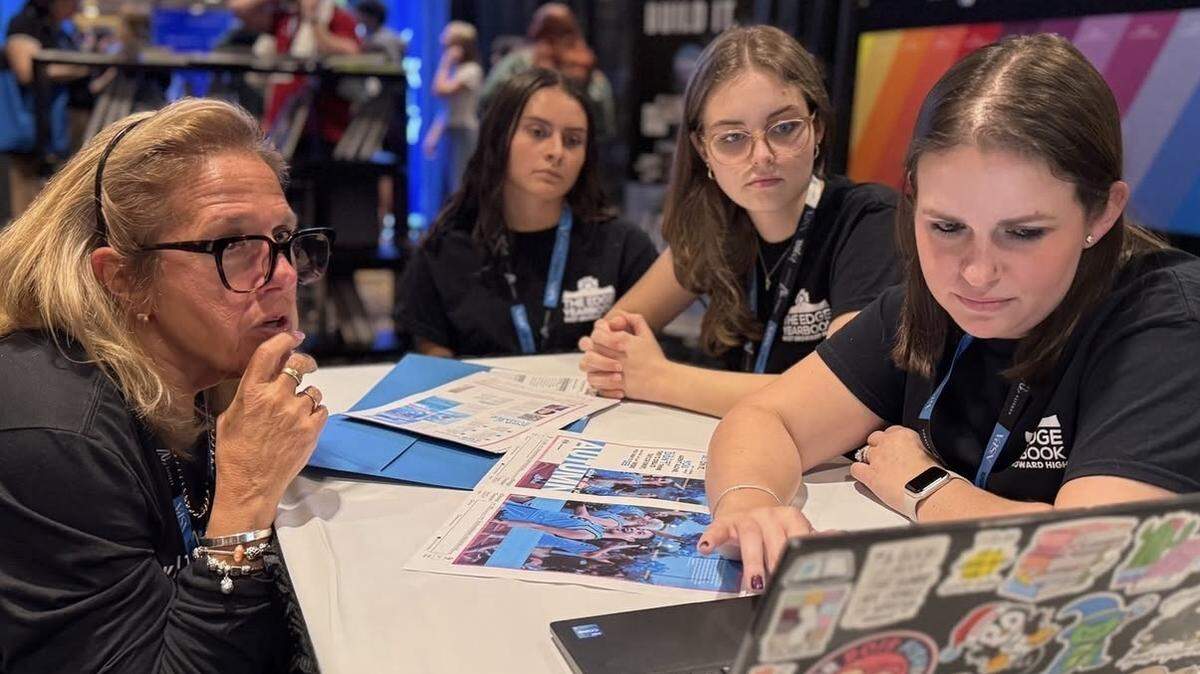
Three weeks before the school year began, the team behind the West Broward High School yearbook stared at a design it was supposed to feel confident about.
Instead, it felt all wrong.
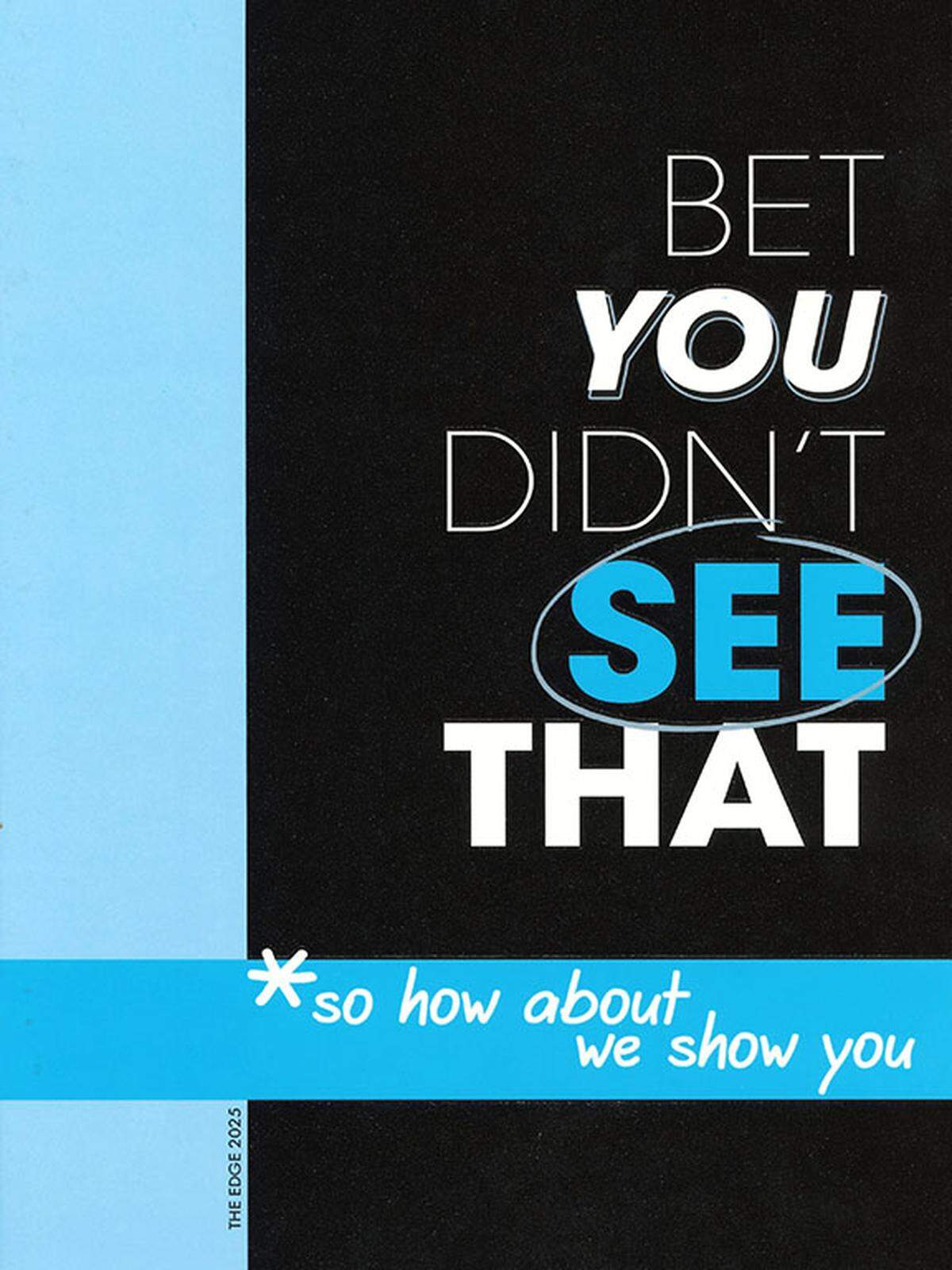
“I hate this cover,” the text from class adviser Brooke Acosta read.
Co-editor-in-chief Erica Zuber said she felt relief after receiving the message, followed almost immediately by panic. The team had two weeks to start over.
And recently, that risk paid off.
West Broward’s 2025 yearbook, The Edge, earned national recognition after being named a finalist in the National Scholastic Press Association’s annual Pacemaker competition, placing it among 58 schools nationwide.
The NSPA announced the finalists on Dec. 18. Often hailed as the “Pulitzer Prize of student journalism,” the Pacemaker honors excellence in student-produced publications based on coverage, design, writing and overall impact.
This year, finalists represented roughly the top 17% of entries nationwide. Of the 58 yearbooks selected, 18 will receive the Pacemaker award at the Journalism Education Association/National Scholastic Press Association Spring National High School Journalism Convention, scheduled for April 16-18 in Minneapolis.
Only 10 Florida schools were named Pacemaker finalists, with West Broward standing as the sole finalist from Pembroke Pines.
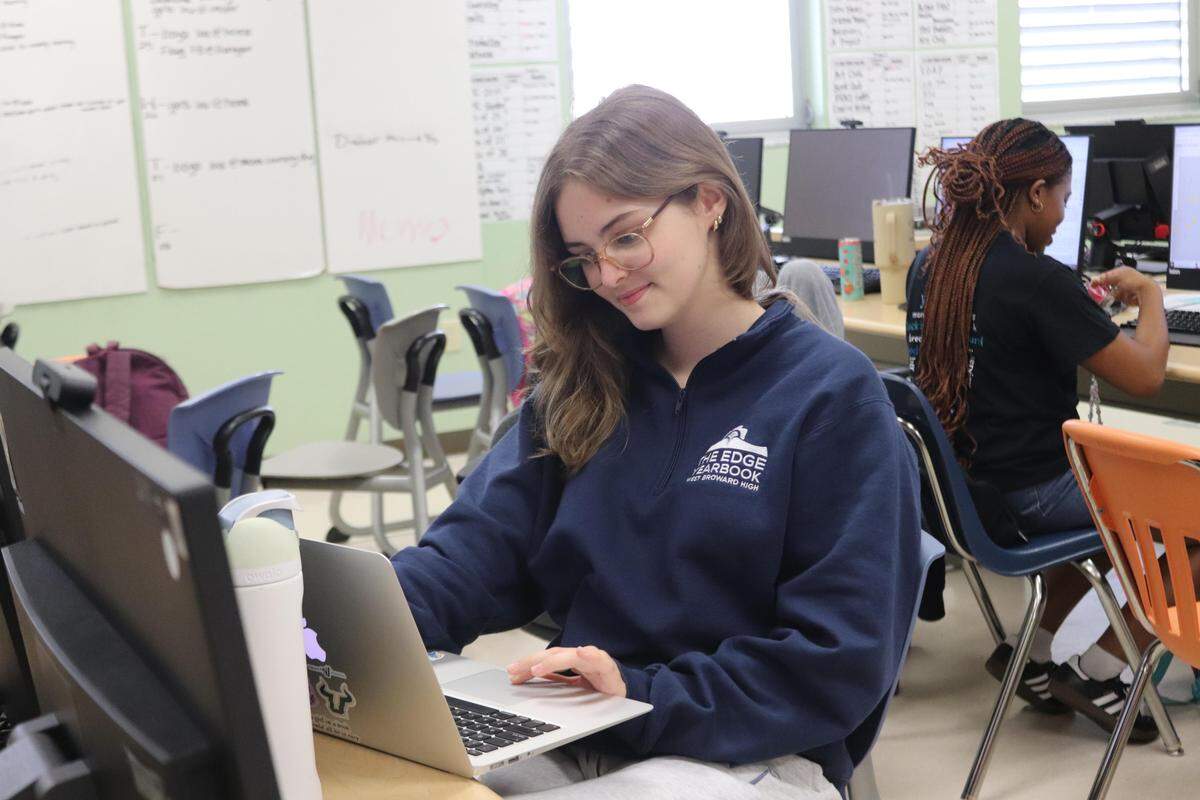
Comprised of around 25 students each year, the staff meets during the school day for course credit but is classified as a co-curricular because of the work required outside school hours, Acosta said.
“I spend more time on my campus than I do at my own home,” Acosta told the Pembroke Pines News on Dec. 23. “It’s my job, but it’s for me, yearbook’s more than a job, it’s really a passion.”
A Pembroke Pines resident, Acosta has taught at West Broward for about five years and has 13 years in the profession.
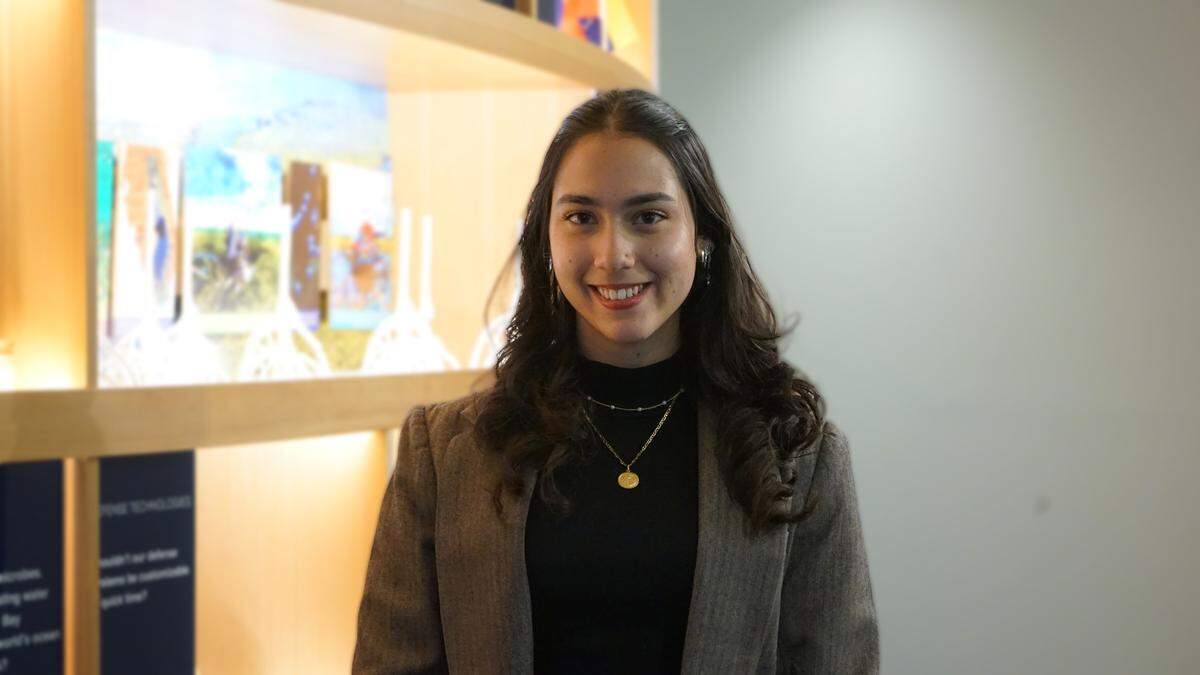
Leading the student staff last year, co-editors-in-chief Zuber and Thea Larragoite divided responsibilities to balance copy editing, spread design and event coverage.
“I’ve always told Miss Acosta, like me and Thea, we’re like two pieces of a puzzle,” Zuber said. “Where the other one lacks, the other one was able to help fulfill, and so I think it was amazing to have two editors-in-chief because we were able to kind of balance that role together and still lead in different ways.”
The team faced high stakes not just in its deadlines, but in crucial creative decisions. Feedback from a summer conference before the school year started hosted by the yearbook publisher, Varsity, initially threw the team’s vision off course.
“We went in with a plan, and that plan completely changed at Palooza based on feedback from other advisors,” Acosta said.
Just weeks before school began, the team looked at the new cover and realized it didn’t reflect the story it wanted to tell.
“It didn’t feel genuine,” Acosta said. “It didn’t feel authentic to the story we wanted to tell and I think we were too busy listening to what others were saying about our original theme and vision, and then we were just changing it, and it was rough.”
Despite the pressure, Zuber said the process taught the team to trust its instincts and return to the north star.
“We had finalized this design at that point that was very different from what you see now,” Zuber said. “The fonts were kind of similar, but it was yellow-orange, we were going for this gradient vibe. It’s kind of infamous in our group for how crazy that was because it just kind of snowballed.”
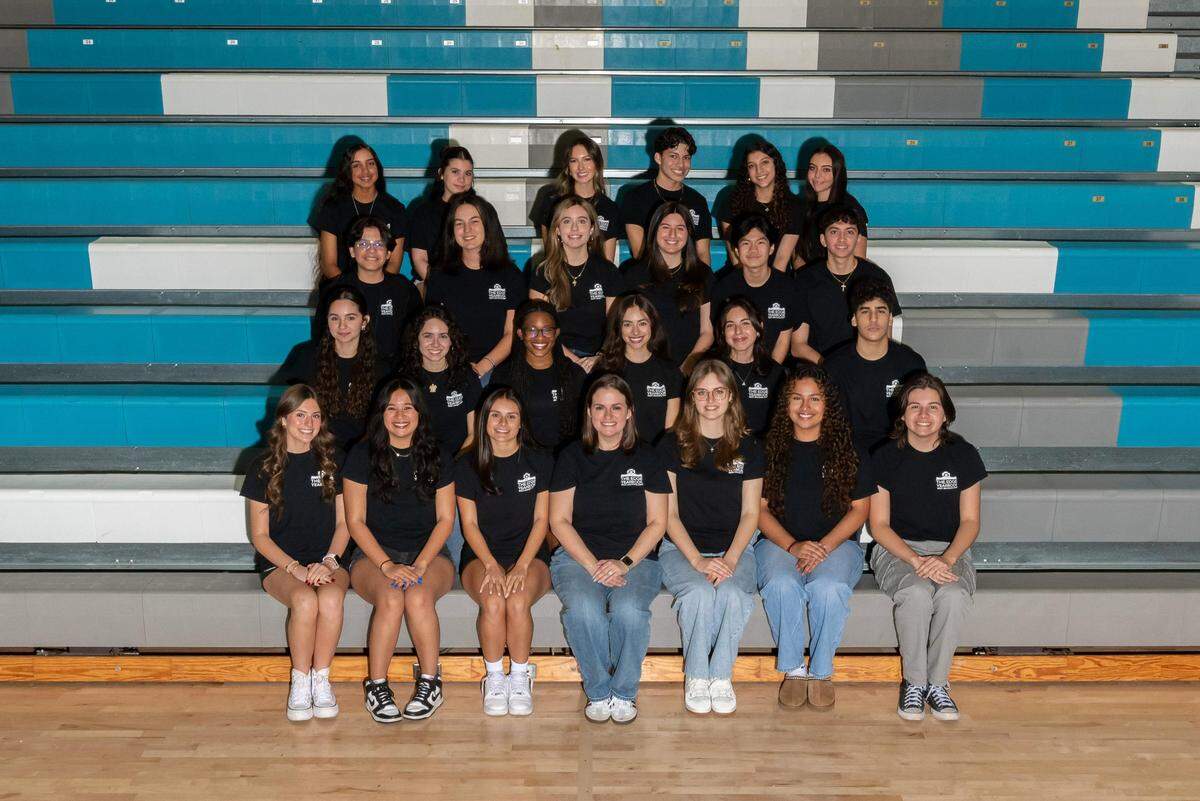
While the leadership team wrestled with the cover, the rest of the staff was working on organizing portraits, covering school events and managing the daily production that keeps the book on schedule.
Acosta pointed to Larragoite to spotlight the book’s theme: telling the same story in a different way. Acosta encouraged the students to look for moments and people usually overlooked that lie among the usual school events and accomplishments.
“The theme was driven around, what are all the stories that are happening that we may not see but deserve to be told?” Acosta said.
Zuber said the team emphasized showing West Broward’s story in a bold, unexpected way with visual and narrative surprises throughout.
“I think that telling the story differently, reflected in every aspect of the book when it comes to design, photography, writing,” Zuber said.
“We also wanted this book to be something that students weren’t expecting, which is kind of cliché, because that plays in the name of the book, ‘Bet you didn’t see that;’ we wanted it to be something unexpected, bold and bright,” she said. “That’s why we went with that bright color design and the big fonts and the doodles, and even the cover itself of the book has multiple textures.”
For one of the module spotlights, Larragoite wrote about the soundboard techs who help with school performances, the people behind the scenes who often go unnoticed. She said stories like these, and the overall yearbook experience, have made her more confident.
“Especially with interviewing, I became way more comfortable talking to people,” Larragoite said. “As far as the leadership goes, freshman year, I could have never seen me where I am today.”
For Zuber, the responsibilities the yearbook brought taught her skills she’s using in her freshman year of college studying mass communications at the University of South Florida, where she hopes to pursue a career in journalism.
“I know it sounds dramatic, but yearbook has completely changed my life,” Zuber said. “I think that a lot of that comes from Ms. Acosta’s leadership and the way that she runs that class, because it’s such a great balance of teamwork and striving for excellence, and also, like building people up to be leaders.” Pacemaker finalists will be recognized during the awards ceremony on Saturday, April 18, at the JEA/NSPA Spring National High School Journalism Convention.
This story was originally published December 23, 2025 at 4:55 PM.