‘Learning comes alive.’ Extended reality headsets take over local middle school
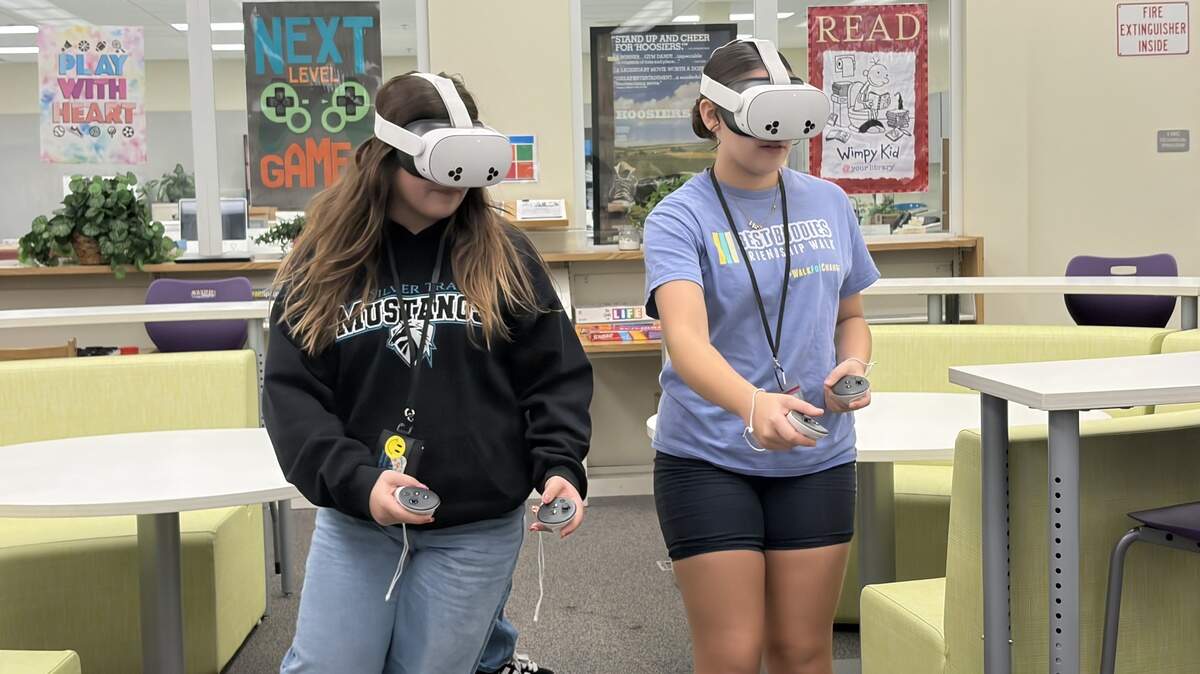
If you’re wondering what Silver Trail Middle School students did in class today, you might get different answers.
Some hiked the grassy, English plains surrounding Stonehenge, while others floated in outer space, getting an aerial view of the solar system. None required field trip forms.
How’d they get there? With the help of 50 new extended reality (XR) devices that will soon become a staple in the Mustangs’ classrooms.
“Students learn best when they are fully engaged, when learning comes alive for them,” said Debra Hixon, Broward County Public Schools board member, at a Dec. 12 ribbon-cutting ceremony for the XR headsets at STMS. “Virtual reality does exactly that.”
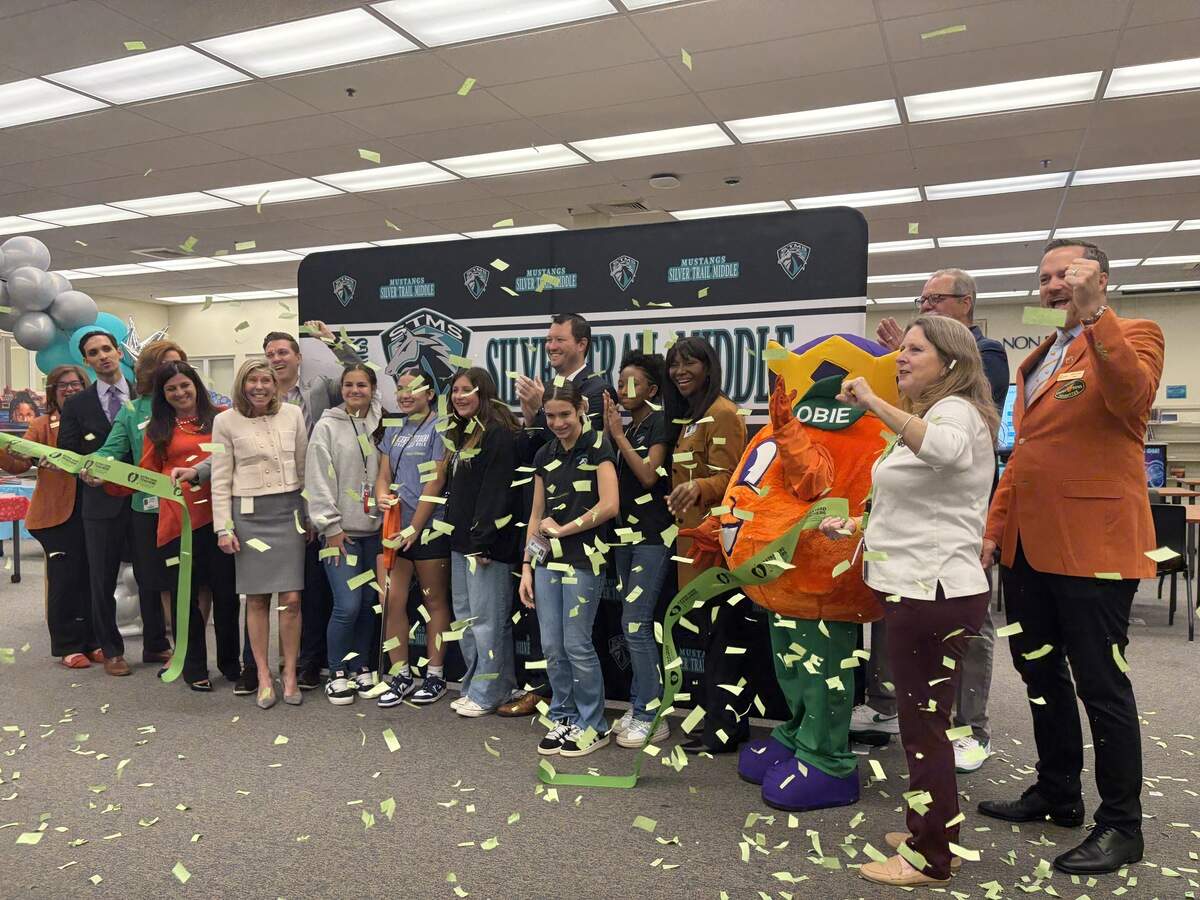
Silver Trail is the latest BCPS middle school to welcome the high-tech devices — as well as a refurbished, collaborative lounge dubbed an “innovation space” — as part of a multi-year grant from the College Football Playoff Foundation, Orange Bowl Committee and Broward Education Foundation.
The organizations have pledged approximately $500,000 and related donations of equipment to support 10 district schools selected by BCPS’ Applied Learning Department over five years. Previous giftee schools include Stranahan High School, Apollo Middle School, Bair Middle and Millenium 6-12 Collegiate Academy, with three middle and elementary schools slated to recieve the headsets next.
Schools picked to host the XR headsets must have an in-house media specialist and strong STEM faculty capable of realizing the technology’s potential to engage students in the classroom, explained Susan Cantrick, director of the Applied Learning Department.
“We work together to create an environment where students want to come to school, they want to stay in school and they want to graduate from school,” she told ceremony attendees. “These devices are just one step towards that future.”
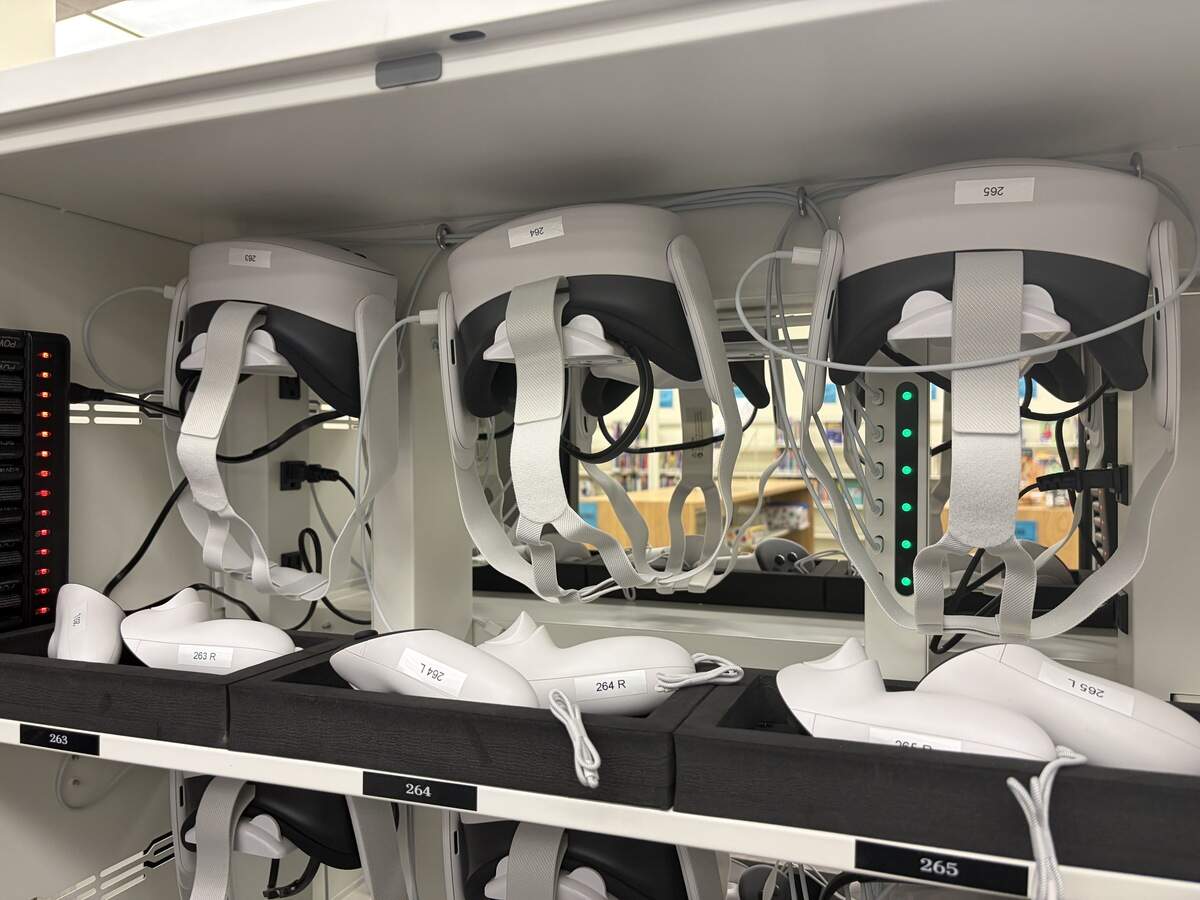
How the devices capture students’ attention spans isn’t far off from how a video game would.
Once they strap on the white headset, they’re placed in “immersive environments” they can manipulate that correspond with what they’re learning in class.
For history class, that could look like dropping in on Independence Hall while the United States Constitution is being signed. In science class, it could mean floating around celestial bodies to understand what makes up a star.
Some XR experiences, such as the Stonehenge or solar system walkthrough, are simply informative, scalable displays that can be zoomed in or out of.
Others are gamified, such as a math demonstration that lets students pretend they’re jet pilots leaving behind contrails to simulate intersecting lines.
“Once I heard we were getting the headsets for social studies, a big light bulb went off trying to figure out what we can do with them,” said Pawel Gielar, the history department head at Silver Trail. “Once we introduce a lesson, they can get on a headset and see the visual of what we discuss. It’s not just a PowerPoint anymore. They’re inside the reality and able to see what things look like.”
But eighth grader Veronica Zambrano’s hopes for the device to land closer to the district’s goals for the technology: to make learning fun and open up a world of possibilities for students.
“I think this is going to be a great tool for history [because it] is quite boring sometimes,” she told the Pembroke Pines News on Dec. 12. “I just feel like being able to experience a tiny bit more of [historical figures’] world could make it so much easier to remember stuff or maybe find a career path that you really like.”