FPL gets green light for $7 billion rate hike. Here’s how much more you’ll pay
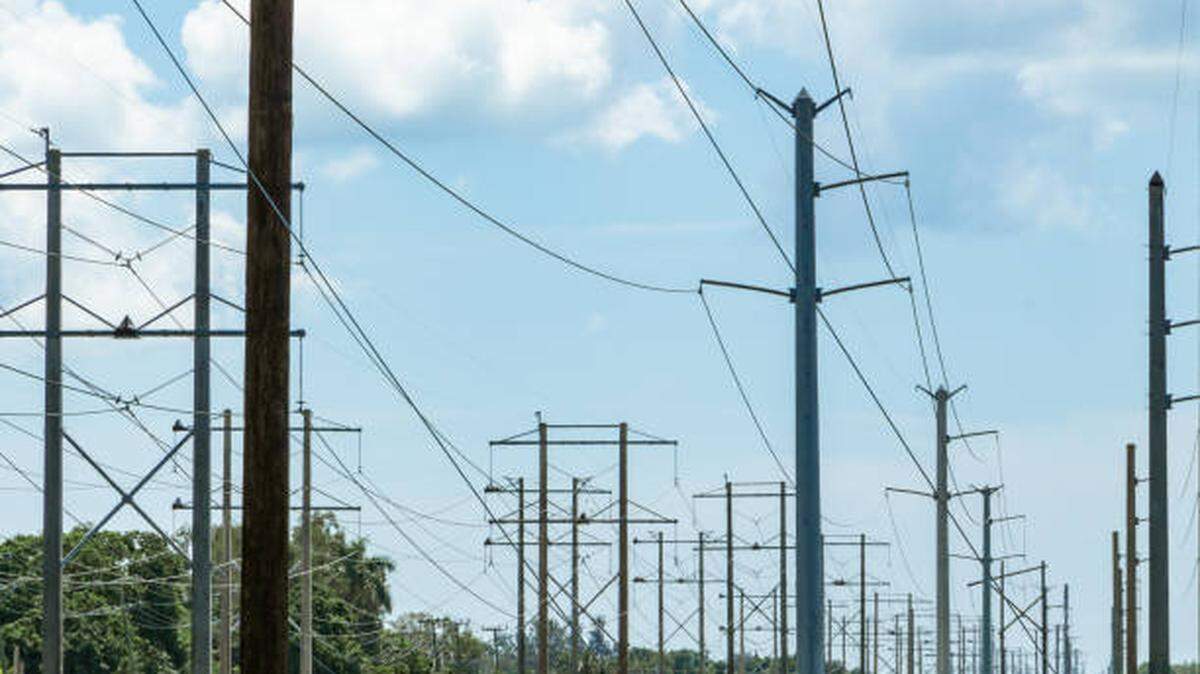
Pembroke Pines residents will soon see an increase in their electric bills.
Florida Power & Light will raise rates across the state starting in January, after the Florida Public Service Commission (PSC) approved a $7 billion rate hike on Nov. 20, the largest in the utility’s history.
The decision came after months of public pushback.
FPL had initially requested $9 billion in increases over four years, but following public outcry, the utility reached a settlement that reduced the amount.
The city of Pembroke Pines was one of several local governments that opposed the initial increase. In May, 30 local, state and national organizations submitted a joint letter urging the PSC to reject FPL’s proposal.
The Manatee County Commission also filed objections, and in June, Pembroke Pines commissioners submitted their own concerns.
In September, the Collier County Commission unanimously passed a resolution rejecting the rate hike request, according to Food & Water Watch, an environmental advocacy organization.
The final FPL rate plan was submitted to the PSC on Aug. 20. Under Florida law, FPL — which operates as a regulated monopoly serving more than 6 million customer accounts statewide — must receive PSC approval for any base-rate changes.
Under the settlement, base rates will rise by $945 million in 2026 and $705 million in 2027. FPL will also be allowed to recover the costs of future solar and battery projects through a Solar and Battery Base Rate Adjustment, known as SoBRA.
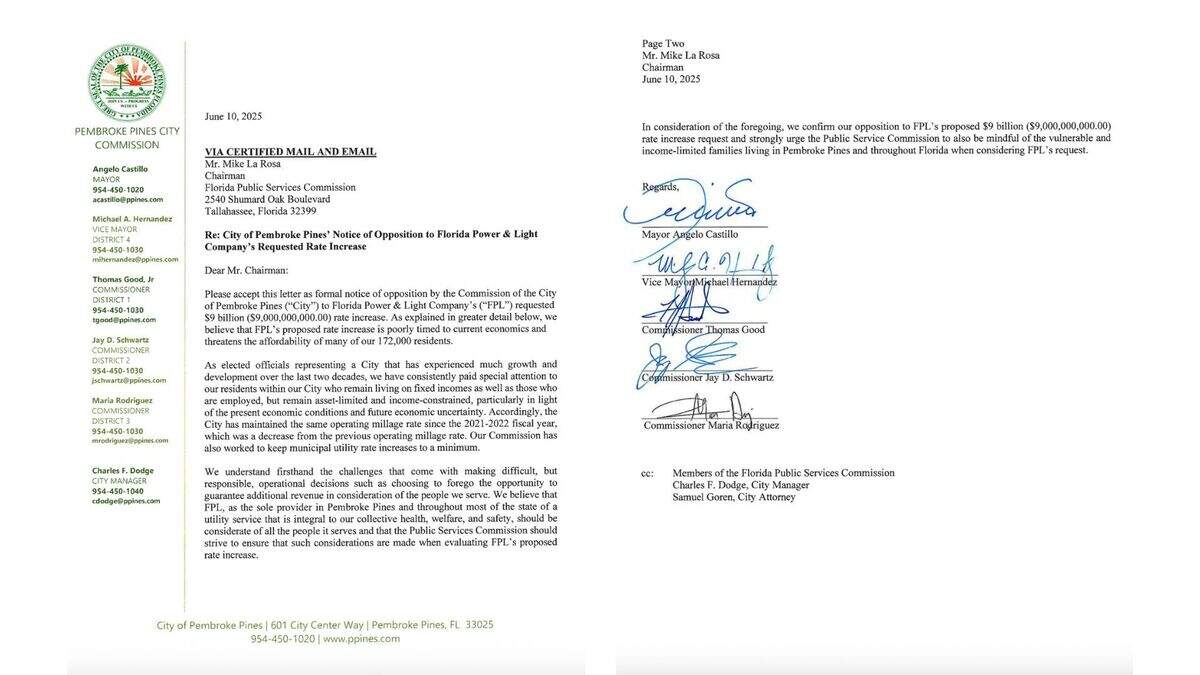
“I thought it was important, albeit symbolic, to become the first city to oppose the FPL rate increase,” Vice Mayor Michael Hernandez told the Pembroke Pines News on Dec. 1.
Hernandez, who worked for the utility company approximately 20 years ago, said the rate hike will make it increasingly difficult for elderly residents in Pembroke Pines to absorb another increase.
“I think you’re a good company, but I think that this is an unnecessary request,” Hernandez says. “It contributes to the image that your company has across the state of Florida, that you are more concerned with the stock price and pleasing your top shareholders than you are in helping the average Floridian who has no other option for electrical service.”
According to the PSC rate plan report, “FPL may build solar generation projects in 2027, 2028, and 2029 and battery storage projects in 2028 and 2029 and recover their costs through ... (”SoBRA”) by demonstrating either an economic need or a resource/reliability need.”
Hernandez said that the continous rate increase has become unsustainable across the state.
“Every four years, it’s a multi-billion dollar rate increased request, and that is not sustainable for the average Floridian,” Hernandez said.
This means customers could see additional increases tied specifically to those projects in the later years of the settlement.
FPL estimates the impact will be about $30 in the first year ”for typical 1,000-kWh residential customer bill[s].”
FPL’s generating capacity fleet includes solar, natural gas, nuclear and battery storage.
The Office of Public Counsel, which represents FPL’s residential customers, opposed the settlement, along with groups such as Florida Rising and Floridians Against Unfair Rates.
During the Nov. 20 PSC meeting, commissioners compared the approved settlement to FPL’s original Feb. 28 filings. Elisabeth Draper, Director of PSC’s economics division, told commissioners the updated plan reflects “an increase of approximately $2.50,” on a monthly bill, Draper said.
Commissioner Gabriella Passidomo Smith raised concerns about some elements of the agreement, saying the return on equity and adjustments to the Conservation and Load Control (CLC) credit “gave her pause.”
Still, Commissioner Passidomo Smith said that taking into account other parts of the settlement and evidence presented in the case, she was “comfortable” that the proposed return on equity meets legal standards.
“It’s not the dream settlement, but it is the one before us,” Commissioner Art Graham said.
PSC Chairman Mike La Rosa called the agreement a “positive outcome for customers” that gives them “the ability to plan in the future for these next two years.” The commission approved the stipulation settlement agreement unanimously.
FPL’s current four-year rate agreement is set to conclude at the end of this year. In August, FPL reached a four-year agreement with a broad coalition of customer groups on a revised rate plan and presented it to the PSC. The rate-setting process took about 11 months.
In a Nov. 20 news release, FPL stated that the settlement “enables continued investments in smart grid technology and other measures to help automatically restore and prevent customer outages.”
Hernandez said that the continued ask doesn’t add up.
“If FPL was requesting a rate increase once every 10 years or six years, and it was justified in their backup documentation, I can accept that, because every company needs to earn a little bit more money every few years in order to survive,” Hernandez said.
“However, I also know that they just had an approval now, and within the next year they will be planning their rate increase request for three years from now.“
In the same release, FPL President and CEO Armando Pimentel described the approval as a “win for our customers and a win for the entire state.”
Hernandez said that residents still have the power to voice their concerns to their elected representatives.
“I think it’s important to note that while the rate increase has been approved, they still have the right as a resident to register their disapproval directly with both Florida Power Light and the Public Service Commission,” Hernandez said.
“Because change doesn’t happen overnight.”