Congressional map shifts parts of Pines and Miramar to new district. What to know
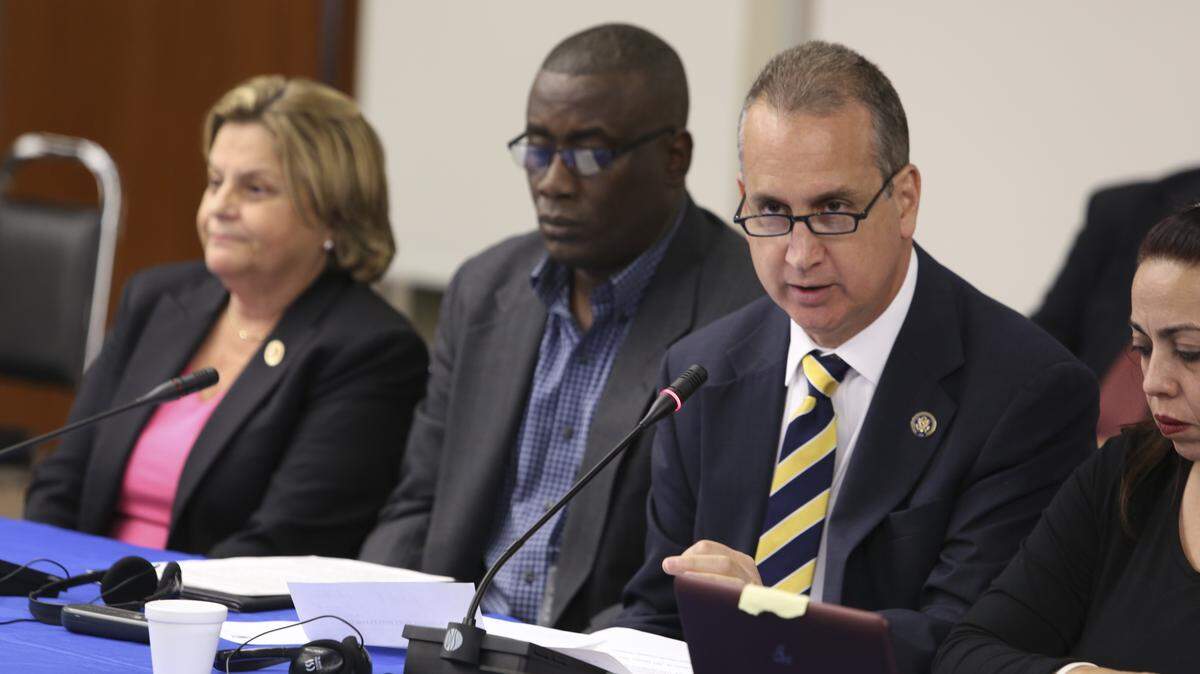
Parts of Pembroke Pines and Miramar are under new leadership on Capitol Hill following the ratification of a Florida congressional map that’s expected to increase Republican representation statewide.
The map — which shifts some GOP voters into typically Democratic-voting congressional districts — was passed by the Republican-controlled state legislature on April 29 and signed into law on May 4.
Redistricting changes follow pressure from President Donald Trump to edit congressional maps ahead of the 2026 midterm elections and could see four more Republican leaders elected during the midterm vote.
Florida currently has 20 Republican and eight Democratic seats.
Here’s what we know about how southwest Broward could be affected.
Shifting territory
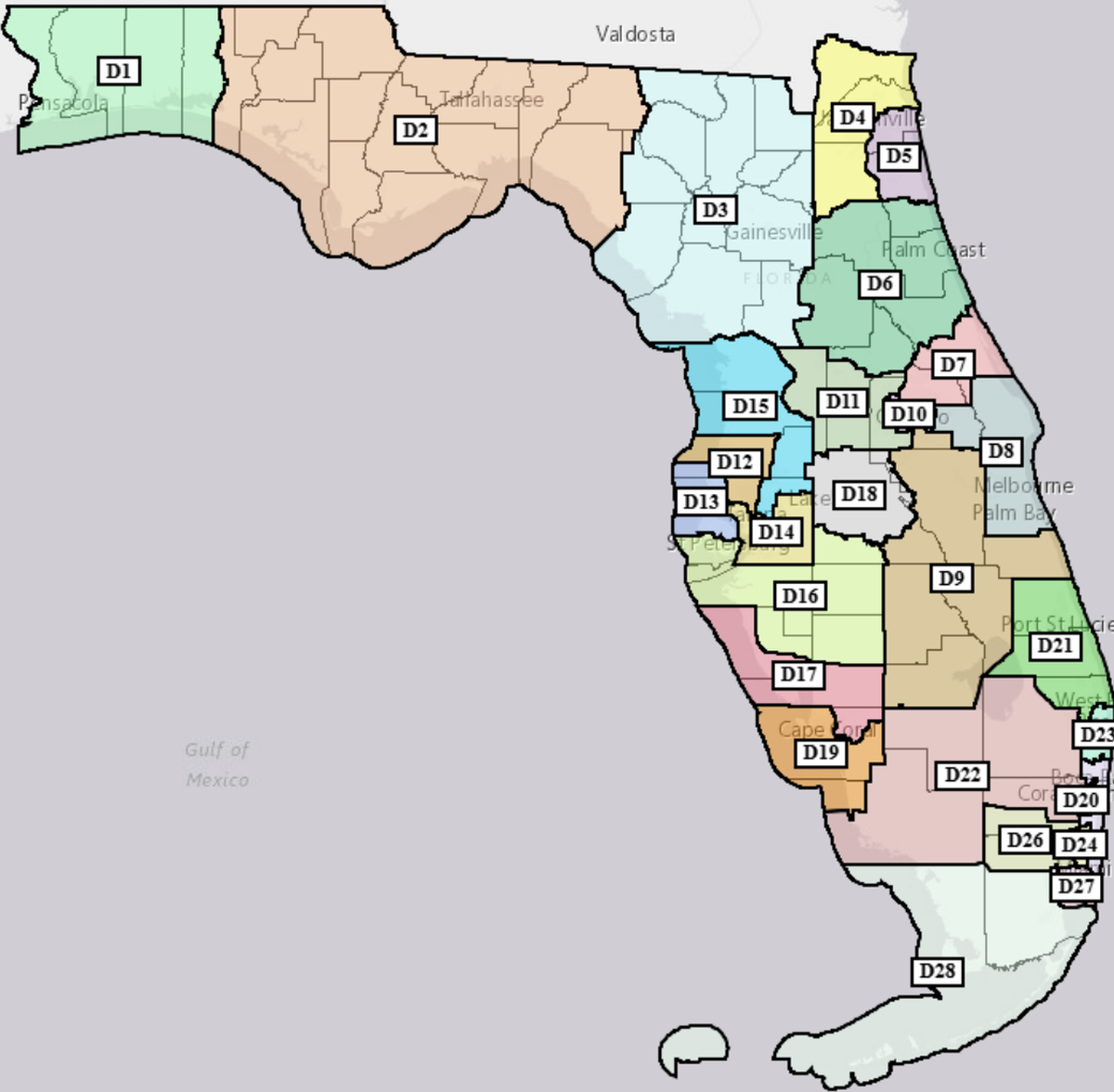
Sections of southwest Broward — including parts of Pembroke Pines and Miramar, as well as Cooper City, Davie and Southwest Ranches — will now be absorbed into the 26th congressional district, which previously stretched from Hialeah to Collier County, led by Republican U.S. Rep. Mario Díaz-Balart.
That includes Pembroke Pines residents who live west of Palm Avenue and north of Johnson Street as well as Miramar residents who live west of Palm Avenue.
To check what congressional district your home falls under, visit the Florida Senate’s interactive map.
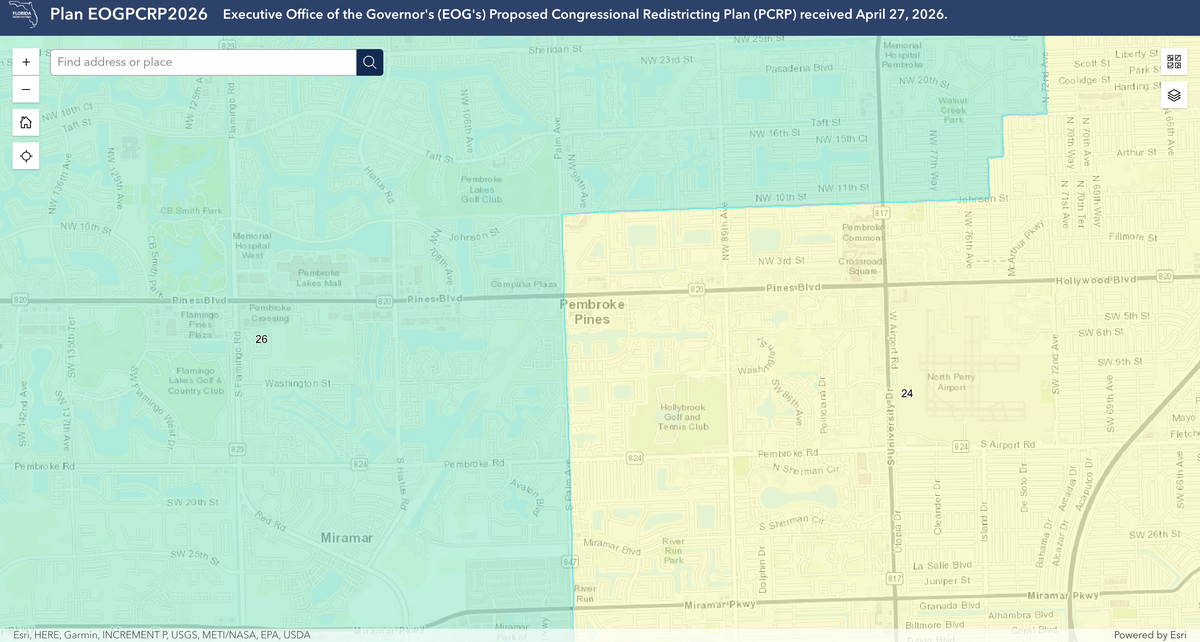
U.S. Rep. Debbie Wasserman-Schultz (D) previously represented Pembroke Pines and parts of Miramar in District 25, while U.S. Rep. Frederica Wilson (D) of District 24 represented the remainder of east Miramar.
Sections of District 20 — the Evergaldes-heavy territory formerly overseen by U.S. Rep. Sheila Cherfilus-McCormick (D) until her resignation from office in April — will also form part of the new 26th congressional district.
In exchange, Díaz-Balart’s former hold on eastern Collier will now be handed to U.S. Rep. Lois Frankel, who oversees District 22.
Most of Díaz-Balart’s congressional territory is still moored by Miami-Dade, including the cities of Doral, Hialeah, Miami Lakes and parts of Miami International Airport’s land.
According to the Sun Sentinel, the redraw keeps District 26 largely GOP-leaning, though not as strongly as it was previously, political analysts said.
During the 2024 presidential election, the former district voted for Trump over Democratic nominee Kamala Harris by 35 percentage points, one analyst told the Sun Sentinel. In the new district’s territory, Trump would have led Harris by 18 points.
Who is Mario Díaz-Balart?
Díaz-Balart is the dean of Florida’s congressional delegation, earned by being the longest serving Floridian in the U.S. House of Representatives.
He was elected to office in 2002 as part of the 108th Congress and is a Miami-Dade County native, though he was born in Fort Lauderdale.
Most notable in Díaz-Balart’s history is his family’s decades-long roots in South Florida and Cuban politics.
For eight years he served alongside his second eldest brother, Lincoln Díaz-Balart, who represented a neighboring congressional district from 1993 to 2011. His third eldest brother, Jose Díaz-Balart, is a news anchor for NBC News and Telemundo.
Before Lincoln Díaz-Balart died of cancer last March, he and Mario Díaz-Balart were known in Congress for their staunch political opposition to the Cuban communist regime.
Their father, Rafael Díaz-Balart, was also a leader in the Cuban House of Representatives before Fidel Castro’s regime. Díaz-Balart is the paternal nephew of Castro’s first wife.
Legal pushback
Florida’s new congressional map found itself in legal hot water hours after DeSantis signed off on the redistricting.
Civil rights group Equal Ground Education Fund — along with 18 Floridians — filed a lawsuit May 4 alleging the governor and state legislature “openly flouted” the Florida Constitution by passing the map.
The 71-page complaint says the map violates the Florida Fair Districts Amendment, approved in 2010, to prevent officials from favoring or disfavoring an incumbent or political party.
“This map is not just flawed, it is a deliberate and unconstitutional attempt to manipulate our electoral system for partisan gain,” said Genesis Robinson, Equal Ground’s executive director, in a May 4 statement.
Pembroke Pines residents who live west of State Road 847 and north of Johnson Street — as well as Miramar residents who live west of State Road 847 — will be under Díaz-Balart.
This story was originally published May 7, 2026 at 10:56 AM.