Mouth Taping Went Viral, But a 2025 Review Says Proceed With Caution
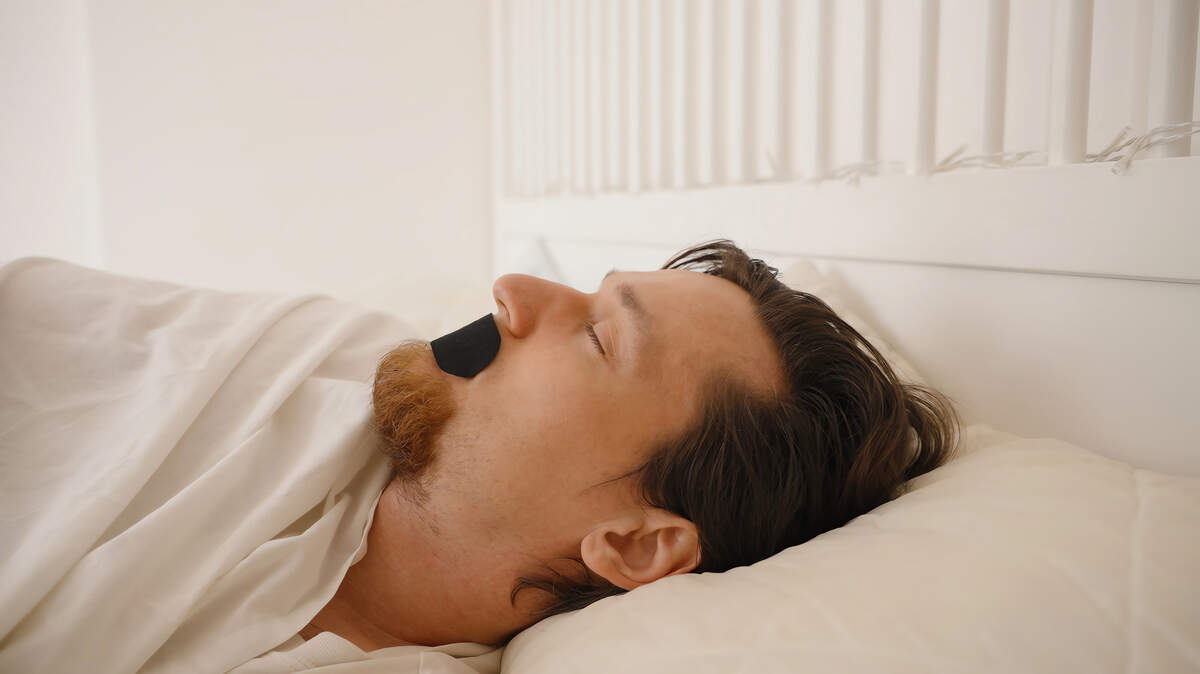
Nasal breathing content has taken over TikTok and Instagram in early 2026, and mouth taping has become the wellness world’s go-to sleep hack. The premise is simple: place a small adhesive strip over your lips at night to force nasal breathing. The reality is more complicated.
A 2025 systematic review published in PLOS One analyzed 10 studies and reached a pointed conclusion: mouth taping offers minimal benefit for sleep-disordered breathing and poses serious asphyxiation risks for anyone with nasal obstruction. It may provide slight benefit only for people with mild obstructive sleep apnea who can already breathe freely through their nose. That is a narrow window — and most people mouth breathe precisely because of congestion, which makes taping the mouth shut genuinely risky.
You Might Be a Mouth Breather and Not Realize It
Mouth breathing often happens during sleep, which makes it easy to miss. Per Cleveland Clinic and Healthline, the signs to look for include:
- Waking up with a dry mouth or sore throat
- Drooling on your pillow
- Chronic bad breath despite good oral hygiene
- Snoring, or being told you snore
- Daytime fatigue and brain fog even after a full night’s sleep
- Frequent nasal congestion that never fully clears
One physical marker worth noting: mouth breathers often carry their head forward to open the airway, and that postural shift can become its own habitual pattern over time.
What Mouth Breathing Does to Your Body Overnight
The mechanism matters here. Mouth breathing triggers shallow, faster breaths that keep the sympathetic nervous system — the body’s “fight or flight” mode — activated. That works directly against the parasympathetic state needed for deep, restorative sleep.
There is an oxygen component too. Nasal breathing produces nitric oxide, which improves oxygen absorption and dilates blood vessels. Mouth breathing bypasses that process entirely. Over time, reduced nighttime oxygen levels have been linked to cardiovascular strain, including elevated blood pressure. Mouth breathing is also closely tied to snoring and obstructive sleep apnea. In children, the disrupted deep sleep it causes can interfere with human growth hormone release and is frequently misdiagnosed as ADHD.
Why It Happens — and Why It Sticks
The most common causes are nasal congestion from allergies, chronic rhinitis or sinus infections, along with structural issues like a deviated septum, enlarged adenoids or tonsils, and conditions like asthma or anxiety-driven shortness of breath.
The harder issue: habitual mouth breathing can persist long after the original congestion clears. The body learns the pattern and defaults to it even when the nose is open. That cycle is part of why this is harder to self-correct than most people expect.
What the Evidence Actually Supports
The fixes that hold up are less dramatic than a strip of tape. Treating the underlying cause is the most direct path — allergies, congestion and structural issues are all addressable through medication, saline sprays, nasal strips or an ENT evaluation. Using saline rinses at the first sign of congestion can help prevent mouth breathing from becoming a locked-in habit before it starts.
Sleeping with your head slightly elevated encourages nasal airflow. Air purifiers or HVAC filters at home reduce the allergen load that drives nighttime congestion. Consciously practicing nasal breathing during the day can gradually retrain the habit — it addresses the behavior directly rather than mechanically forcing the mouth closed.
For persistent cases, an ENT referral can assess for a deviated septum, enlarged adenoids or sleep apnea, all of which are treatable.
The Global Wellness Institute’s 2025 Breathe Initiative confirms that nasal breathing sits at the intersection of two fast-growing wellness categories: sleep optimization and breathwork. The cultural momentum is real. But if several of the signs above sound familiar, a conversation with your doctor is a better starting point than anything trending in a wellness feed.
This article was created by content specialists using various tools, including AI.